S Curve Photography: A Composition Technique for Photos
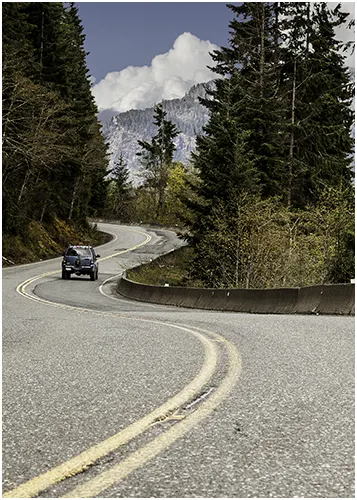
S curve photography is easy to practise here on Vancouver Island because the roads rarely

Show Mom Some Love For Less, Mothers Day Sale – 25% off
I’ve been photographing long exposure moving subjects for years, and I’ve learned that getting the right balance between motion and sharpness takes a bit of practice. A slow shutter often softens water or can create those lightly flowing clouds. It can also blur a person, an animal, a boat, or a wind-blowing branch. In long exposure photography, the camera’s shutter stays open long enough for the sensor to record changing motion, so moving elements blur while stationary objects remain sharp.
The fix starts before you choose a shutter speed. Decide what should move, what should stay sharp, and whether one frame can show both.
Long exposure of moving subjects will be blurred, streaked, transparent, or even absent. The goal may be to blur movement, as in intentional camera movement (ICM), or keep the main moving object sharp against a softer background.
Camera shake can often cause the entire frame to appear soft. While using a tripod helps to stabilize the camera and eliminate unwanted movement, it does not account for the motion of subjects such as birds, people, or leaves swaying in the wind.
Intentional camera movement, on the other hand, is a technique that involves moving the camera during the exposure. Refer to our guide in ICM.
Before setting up, decide which result supports the composition:
The same long-exposure principle works for night photography. Light trails, a star trail across the night sky, and light painting all depend on what changes while the shutter is open.
One slow exposure cannot normally freeze a moving subject while recording background motion. The same shutter speed affects the entire frame. A slow shutter speed that smooths moving water can record a walking person in several positions. The longer the length of the exposure, the farther moving subjects can travel while the shutter is open.
Keeping the shutter open longer increases the amount of recorded movement.
Choose the simplest method that produces the motion you want.
| Method | Best Use | What Stays Sharp | Main Limitations |
|---|---|---|---|
| Single slow frame | Water, clouds, traffic, crowds | Fixed landscape details | Moving subjects blur or fade |
| Faster single frame | Wildlife, people, windblown plants | Subject and stable details | Less motion effect |
| Two-frame blend | Sharp subject with soft water or clouds | Chosen subject and landscape anchors | Needs alignment and careful masking |
| Rear-curtain flash | A nearby moving subject with a trail | Flash-lit subject near trail end | Flash range and ambient blur |
To consistently achieve long exposure of moving subjects, begin with a sturdy tripod and refrain from altering the framing once the initial exposure is established.
This is the sequence I follow:
Trigger the camera with a remote shutter release or timer.
Review highlights, edges, and fixed details.
Choose the exposure based on the movement you want. A half-second wave can hold texture, while a longer exposure may remove it. Test several times without moving the camera. Review the highlights as well as the dynamic range so the long-exposure images retain useful detail in bright and dark areas.
Capture a faster safety frame if grass, leaves, or branches are blowing in the wind.
Looking to stretch your budget? We’ve got good news! Use the SPECIAL code whosaid15 for an extra 5% off
Keep the camera position and focal length fixed. Use fixed focus and a fixed aperture across both frames. Shorten the shutter for the subject’s motion.
Increase the ISO to achieve a similarly bright faster frame, or alternatively, wait for improved lighting conditions. Be aware that changing your aperture will affect both the depth of field and the exposure.
For long exposure of moving subjects near water, use the reflection from the same faster frame. A mismatched reflection can expose the blend.
When I am at the beach photographing waves crashing onto the sandy beach, I prefer to take shots as the waves are rolling back into the ocean.
...Bob
Place the faster frame above the base in a layer-based editor. Align the layers, add a mask, and reveal the subject with its shadow or reflection.
Work in a simple order:
Look for double edges. A bright halo includes too much fast-frame background, while a dark rim can reveal the base. Refine the mask instead of adding heavy sharpening.
If conditions change, match the overall brightness and colour before making local adjustments.
Most failures come from movement between frames or the wrong method.
Do not force every scene into a blend. Complex foliage, spray, or waves can resist a clean blend. A faster shutter or intentional blur may work better.
To photograph strong, long-exposure moving subjects, start with a clear motion choice. When one shot cannot create the blur and sharpness you want, keep the camera fixed and capture a faster frame. I often use this approach in long-exposure photography when a single exposure time cannot handle both stationary details and subject movement.
Does a tripod freeze moving subjects? No. A tripod keeps fixed details steady, while shutter speed determines how subject movement appears.
Does an ND filter make subjects sharper? No. It reduces light for a slower shutter, which usually increases blur in moving details.
Must I blend two exposures? Only when one shutter cannot create both the background motion and subject sharpness you want. A single frame can suit intentional blur, a still subject, or controlled flash.

S curve photography is easy to practise here on Vancouver Island because the roads rarely

I’ve found that perspective can entirely change how a photograph feels. In a landscape, moving

I’ve been to Lake Helen Mackenzie many times over the years. It’s a good option