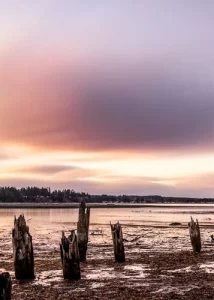
Long Exposure Photography: Control Motion in Your Photos
Long exposure photography is a technique that uses slow shutter speeds to capture silky smooth
Share the Love This Valentine’s Day – 25% Off



Soon after photography was invented in 1839, photographers want to show wide views of cities and landscapes. In the early days placing two or more daguerreotype plates next to each other was the only way to make a panorama.
This is the beginning to the history of panoramic photography.
Early cameras were big and heavy but led to an intriguing way to take wide-angle shots. This art form captured the growth of cities, the beauty of nature, and important events around the world, often using a wide field of view.
Early photographers had a desire to capture the world in a way that felt more immersive. They wanted to show the vastness of their city and landscapes, fitting wide scenes into a single frame.
As technology advanced, panoramic cameras made it easier to stitch together multiple images, creating stunning, wide-angle views. Today, with just a smartphone or DSLR, you can easily create your own panoramic shots, bringing entire horizons into focus.
Most photographers in the 1840s and 1850s only sold daguerreotype photos, paving the way for panoramic photos. Photographers would place several silver-coated copper plates side by side to capture wide, detailed scenes. This method allowed them to create stunning images of expansive cityscapes and landscape
In the early days, photographers had to be creative with their camera skills. By using a special “multi-plate” technique, they were able to create panoramic photos. This involved taking multiple photos on separate plates and then stitching them together. It was difficult to align all the plates, but the results were worth it.
Early panoramic cameras had problems. Photographers had to align the plates and then move the camera. They also had to adjust the image’s perspective afterwards. However, the wet-plate collodion process in the late 1850s helped make panoramic prints easier to make.
Download your free trial today!
Panoramic photography’s history is full of innovators. These early pioneers shaped the field and inspired others.
George Barnard was a key figure early on. He worked during the American Civil War, making stunning panoramas for the Union Army. His photos were very useful for military leaders, showing them the land and opposition defences.
In Europe, Josef Sudek was another master of panoramic photos, showcasing the distortion of urban landscapes. He used the Kodak Panoram Camera to capture amazing views of Prague. His work is considered an art form.
Frederick W. Brehm was important for improving panoramic technology, paving the way for the swing lens camera. He worked for Kodak and helped make the Cirkut camera. His work led to big achievements, like a 20-foot long photo of Washington, D.C., in 1906.
| Pioneer | Contribution | Style |
|---|---|---|
| George Barnard | Civil war panoramas | Military terrain overviews |
| Jesef Sudek | Artistic panoramas | Hightlighting the beauty of Prague |
| Frederick W Brehn | Cirkut camera development | 20ft Washington DC, negative |

In the late 19th century, panoramic photography changed tremendously. The early cameras changed how we take pictures. They allowed photographers to create wide views and group portraits with ease, showcasing the first panoramic techniques.
Swing-lens cameras were a big step forward. They had a lens that moved as you took a picture. This lets photographers capture wide scenes with lots of detail. You could create panoramas up to 140 degrees wide, which is ideal for landscapes.
360-degree rotation cameras enhanced the quality of panoramic photos. They rotated the entire camera while capturing the image. This way, you could make full-circle panoramas. They were perfect for city views and big natural scenes, allowing for a broader field of view than traditional cameras.
In 1904, the Cirkut camera changed everything. It used big film up to 16 inches wide and made 360-degree photos up to 20 feet long, revolutionizing the panoramic landscape genre. Photographers loved it for city scenes, group shots, and big events.
| Camera Type | Key Features | Typical Use |
|---|---|---|
| Swing Lens | Rotating lens, stationary film | Landscapes, up to 140° wide |
| 360-Degree Rotation | Rotating camera body | Full circular panoramas |
| Cirkut | Large format film, up to 20 feet long | City views, group portraits, events |
The American Civil War was a key moment for panoramic photography. Photographers like George Barnard made big strides. They took wide shots that helped in the war and saved a key moment in American history.
Barnard’s photos were key for Union Army leaders, providing them with a panoramic view of the battlefield. They showed detailed views of lands and defenses. This gave leaders important insights they couldn’t get before. The methods used back then were new and set the stage for later improvements.
However, photographers had a big challenge. They used the wet-plate collodion process, which was hard and needed quick skills, much like the skills required for operating a 4 Kodak Panoram camera. In the field, they had to coat, make sensitive, expose, and develop plates. This was a big test for these early panoramic photographers.
The panoramas created during the Civil War era serve as irreplaceable historical documents, offering us a window into the landscapes and battlefields of 19th-century America

Now, these panoramic shots are more than military items; they are highly sought after. These panoramic shots provide historians and researchers with profound insights into the Civil War era. They show how landscapes, cities, and society changed.
| Aspect | Impact on civil war |
|---|---|
| Military Strategy | Provided crucial terrain and fortification information |
| Photographic Technique | The first panoramic images, which pushed the limits of the wet-plate collodion process, set new standards in photography. |
| Historical Value | Created lasting visual records of 19th-century America |
| Technological Advancement | Lay the groundwork for future panoramic innovations. |
In the late 19th century, there was a big change in this style of photography. New technology made cameras easier to obtain. As a result, panoramic photography becomes more popular.
The Al-Vista camera revolutionized panoramic photography in 1898. It was the first camera for wide-angle photos that average people could purchase. This camera kicked off a new phase of panos.
After the Al-Vista, Eastman Kodak introduced the #4 Kodak Panoram in 1899. It quickly became a favourite with amateur photographers and professionals alike. Kodak kept making new Panoram cameras until the late 1920s. These cameras were simple to use and didn’t need a tripod.
These cameras made panoramic photography popular with everyone. They could make pictures up to twelve inches long, with almost 180 degrees of view. This made it simple for more people to take wide-angle photos.
| Camera | Year | Key Feature |
|---|---|---|
| Al-Vista | 1898 | The first mass-produced panoramic camera in America |
| Kodak #4 Panoram | 1899 | Popular among amateur photographers, the swing lens camera is simple to operate and produces stunning panoramic images. |
| Kodak Panoram Models | 1900-1920 | roll film, produced 12-inch panoramas, 180-degree view |
Panoramic photography transformed both the business world and the art scene. Photographers were able to capture vast and expansive landscapes, leading to unparalleled prospects. This innovation sparked significant changes across various industries.
Skilled photographers use panoramic shots to show how cities grow. These big images act like time capsules, showing how the skylines and buildings change over time. They let us see a city’s growth, each telling its own story.
WOW! What a great way to capture large group photos! It lets photographers take pictures of hundreds or thousands of people in one shot.
Nature photographers love panos because they showcase the vast beauty of the outdoors. They’re perfect for capturing huge mountains, big deserts, and long rivers. These shots make you feel like you’re right there, which regular photos can’t.
| Application | Benifits | Popular Subjects |
|---|---|---|
| Cityscapes | Document urban growth | Skylines, street scenes |
| Group Portraits | Capture large gatherings | Conventions and corporate events |
| Landscapes | Showcase natural grandeur | Mountains, glaciers, coastlines |
Over the last century, the world of panoramic photography has undergone significant changes. In the 1880s, flexible film changed everything. It made it easier for hobbyists to capture panos.
Cameras like the Al-Vista and Kodak Panoram became popular. They allow photographers to easily capture wide scenes, broadening their field of view. Professionals used bigger film rolls, up to 16 inches wide, with cameras like the Cirkut.
By the 20th century, 35mm film took over, but when Kodak introduced panoramic formats, that changed everything. This led to smaller panoramic cameras. The Russian Horizon camera from 1967 is a wonderful example.
| Era | Key Innovations | Impact |
|---|---|---|
| 1800s | Flexible film | The new designs enabled a number of panoramic camera innovations that transformed photography. |
| Early 1900s | Consumer panoramic cameras | Amateurs now have access to panoramic photography. |
| Mid-20th century | 35mm film dominance | Led to compact panoramic camera designs |
| 1967 | Russian Horizon camera | Introduced affordable, portable panoramic options |

The world of wide-angle photography has evolved with digital technology, making it much easier to capture expansive scenes.
Digital stitching is a big step forward in panoramic images, allowing for a seamless final image. It allows you to combine many photos into one broad view. With special software, you can make amazing wide-angle shots that were challenging to do before.
Smartphones have taken this even further. Your phone can now take wide-angle photos by simply moving your hands. Panoramic photography has become more accessible to a wider audience, making it easier for everyone to enjoy.
Since its inception in the 1800s, panoramic photography has come a long way. From those early days of stitching together multiple plates to today’s digital stitching techniques and smartphone capabilities, the ability to capture wide, sweeping views has continued to evolve.
Panoramic photos offer a unique perspective, allowing us to see the world in a new way. Whether it’s capturing the growth of a city, the grandeur of nature, or the energy of a large event, panoramic shots give us a more immersive experience.
The pioneers of wide-angle photography paved the way, using innovative techniques and equipment to push the boundaries of what was possible. With the rise of consumer-friendly panoramic cameras and digital tools, capturing expansive views has become accessible to everyone.
So next time you’re out and about, try snapping a panoramic shot on your smartphone. It may surprise you how it changes your perspective and understanding of the world.
Soon after the invention of photography in 1839, early photographers used multiple daguerreotype plates placed side-by-side to capture wide, expansive scenes, marking the birth of panoramic photography.
Panoramic cameras emerged in the late 19th century with the introduction of the first mass-produced panoramic camera, the Al-Vista, in 1898. In 1899, Kodak’s popular #4 Panoram camera followed, making panoramic photography accessible to the masses.
Shortly after the invention of photography in 1839, many panoramic photography techniques emerged. By placing multiple daguerreotype plates side-by-side, early panoramas pioneered a new way to capture wide, immersive scenes that has evolved over time.
Long exposure photography is a technique that uses slow shutter speeds to capture silky smooth
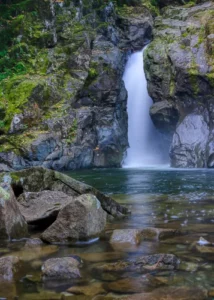
The first time I went to the Medicine Bowls in Courtenay, it felt like a
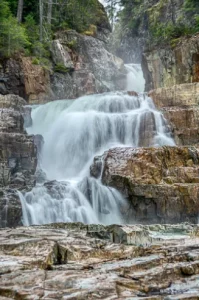
Lower Myra Falls is one of those places in Strathcona Park that feels far more