
Long Exposure Photography: Control Motion in Your Photos
Long exposure photography is a technique that uses slow shutter speeds to capture silky smooth
Share the Love This Valentine’s Day – 25% Off




Standing before a stunning Canadian landscape, you feel a spark of creativity. The scene is beautiful, but you want to capture it in a special way. This is where intentional camera movement, AKA ICM photography, shines. It can turn an ordinary photo into visual poetry.
ICM photography breaks the rules of sharp focus and stillness. By moving your camera during exposure, you create mesmerizing abstract images. Whether it’s the rugged coastlines of British Columbia or Victoria’s vibrant cityscapes, ICM lets you blur with purpose.
Starting your ICM journey opens a new dimension to your art. You’ll learn to play with shutter speeds and zoom techniques. This process is about letting go, discovering a new skill, and inviting unexpected results and beauty into your art.
So, grab your camera and open your mind. Get ready to explore the captivating world of intentional camera movement. This guide will teach you to create stunning ICM images that capture not just what you see but how you feel.
Prefer Listening? Click To Tune Into the Audio Version Here!
ICM photography turns everyday scenes into stunning abstract art. By moving the camera while taking a photo, you get unique, blurred images. This method makes landscapes, cityscapes, and portraits look dreamy and impressionistic.
To create ICM photos, use longer shutter speeds—try a 1/2 second or more, to achieve the desired effect. You can shake, twist, zoom, or pan the camera to get different effects. For the best results, keep your ISO low (100 or less) and use a tripod or tuck your elbows in to control erratic movements.
ICM is all about blur and motion, unlike traditional photography that focuses on sharpness. You’re capturing the essence of movement, not just a moment. This technique lets you play with exposure and shutter speed, encouraging creative exploration.
| Traditional Photography | ICM Photography |
|---|---|
| Sharp focus | Intentional blur |
| faster shutter speed | Slow shutter speeds (1/2 to a second or longer) |
| Static camera | Camera movement (shake, twist, zoom, pan) |
ICM offers endless creative possibilities for fine art photographers. It can turn simple scenes into ethereal landscapes or abstract cityscapes. Since its beginning in the 1960s, ICM has been gaining popularity, especially lately with digital photography making it easier to experiment. It’s about embracing imperfection and letting your creativity shine.
Think of ICM photography as a dance between the photographer and their subject, creating visual poetry that speaks to the heart.

Looking to stretch your budget? We’ve got good news! Save an additional 10% use code bwild10
Starting with intentional camera movement (ICM) photography is exciting. It lets you make abstract and artistic photos by moving your camera during long shots.
It’s best if you have a camera that you can control manually. Being able to change the shutter speed is key. A tripod might be useful for some moves. An ND filter is also great, especially for bright days. A 6-stop ND filter would be my first choice for long-exposure photography.
Find subjects with strong lines, patterns, or colours. Landscapes, city views, and natural things like trees or water are good. Think about the lighting, main parts, and mood you want to show when picking a scene.
Start with these settings:
Try different camera moves to get different looks:

| Movement | Effect | Shutter speed |
|---|---|---|
| Horizontal panning | Streaky horizontal lines | 1/15 - 1/4 sec |
| Vertical panning | Vertical streaks | 1/15 - 1/4 sec |
| Circular motion | Kaleidoscope-like images | 1/4 sec or slower |
| Zoom burst | Radial blur | 1/4 - 1 sec |
ICM photography is all about trying new things. Don’t hesitate to experiment with different moves and settings to find your own style.
I prefer a single movement, up or down once. Going up and down will cause a zigzag streak.
Bob
Mastering camera settings is key for great ICM photography. Try out different settings to find what works best for you.
I’d love to say ISO 100, shutter speed: 1 sec. Aperture of F/22. But each exposure will be different. Use these settings as a starting point and adjust the aperture if you need more light.
Neutral density filters are excellent for shooting ICM and achieving smooth transitions in your images. They let you take longer shots in bright light without overexposing. This lets you play with different movements and speeds.
| Setting | Recommended Range | Cause |
|---|---|---|
| Shutter speed | 1/5 - 3 Seconds | Control blur effect |
| ISO | 100-200 | Reduce noise |
| Aperture | F/16 - F/22 | Control light intake |
These are just starting points. ICM is all about trying new things and experimenting with the movement of the camera. Experiment with settings and movements to find your style.
Intentional camera movement lets you explore new creative paths. It uses longer exposures and handheld methods to make blurry, artistic images. These images capture motion in unique ways.
Linear panning is a key ICM technique. For horizontal pans, try capturing seascapes or cityscapes. Move your camera smoothly from side to side while pressing the shutter to capture long exposure shots.
Vertical pans work well for trees or tall buildings.
To add more dynamism to your ICM shots, try circular or zigzag movements. Hold your camera steady, then rotate it in a circular motion as you take the photo. For zigzag patterns, move the camera at quick, sharp angles.
These techniques can create striking abstract images. They work especially well with colourful subjects.
Zoom bursts are a fun way to create an image with a sense of motion radiating from the center. Start with your lens zoomed in on your subject. As you press the shutter, smoothly zoom out.
This technique works best with a longer exposure. It allows time for the zoom effect to develop.
| ICM Technique | Camera Movement | Best Subjects | Shutter Speed |
|---|---|---|---|
| Linear Pan | Horizontal or vertical. | Landscapes and trees can be beautifully captured using ICM. | 1/15 - 1/4 second |
| Circular | Rotating | Abstract, Nature | 1/4 - 1 second |
| Zigzag | Sharp angles | Urban scenes, lights | 1/8 - 1/2 second |
| Zoom | Zoom lens adjustment | Centred subjects | 1/2- 2 seconds |

Remember, ICM is all about experimentation. Don’t be afraid to try different movements, subjects, and camera settings. With practice, you’ll develop your own unique style of creating captivating, motion-filled images.
Improving your ICM photography takes practice—lots of practice and experimentation. Start by mastering the basics of longer shutter speeds and camera movement techniques.
A good rule of thumb is to use a shutter speed of about 1/10th your lens focal length. For instance, with a 200mm zoom lens, try 1/20 sec as a starting point.
Handheld ICM offers flexibility and spontaneity. It allows for quick composition changes and fluid camera movements.
Tripod-based techniques, on the other hand, provide more control over your abstract images. Experiment with both to find your preferred style.
Try various ICM techniques like camera panning, tilting, and rotating. Each method creates unique effects. Practice in different lighting conditions to understand how light impacts your photos. Here’s a quick guide to popular ICM movements:
Study the work of other ICM experts. Analyze their techniques and try to recreate their styles. Join photography communities to share experiences and get feedback.
Remember, the key to mastering ICM is constant experimentation and finding your unique approach to creating captivating abstract images.
ICM photography can be tricky, but it’s rewarding once you master it. Many of us face challenges when starting out with this creative approach.
Finding the right balance between blur and detail is key. You’ll need to try different shutter speeds and camera movements.
Dealing with changing light when shooting intentional camera movement photography can be tricky, but it’s totally doable with the right techniques! Here’s how to handle it like a pro:
Use neutral density (ND) filters: In bright light, these filters help block some light so you can still use slow shutter speeds without overexposing your image. A 6-stop or 10-stop ND filter works well for daytime ICM.
Lower Your ISO: ISO controls how sensitive your camera is to light. Set it to the lowest setting (like ISO 100 or 200) to avoid making the photo too bright, especially on sunny days.
Close down the aperture: Use a higher f-stop (like f/11 or f/16) to let in less light. This gives you more control when it’s bright out and helps with the long exposures needed for ICM.
Shoot in Low Light: Early morning, late afternoon, or even cloudy days are perfect for ICM. These times give you softer, more manageable lighting.
Check the Histogram: Use the histogram on your camera to make sure you’re not losing important details to bright highlights or deep shadows. Adjust settings if needed.
By combining these tips, you can create those dreamy, motion-blurred shots, even in tricky lighting.
Creative blockages are common in photography, not just in ICM. To break through, try these tips:
After taking your ICM photos, it’s time to make them shine. Post-processing is key to enhancing your images. It lets you fine-tune the look of your intentional camera movement shots.
When editing, tweak the contrast, colours, and sharpness to highlight what you want. Try cropping to improve the photo’s look. Black-and-white conversion can also add a timeless touch. The aim is to boost the emotional impact of your abstract photos.
ICM photography opens up another world of creative possibilities. By moving your camera on purpose, you can turn everyday scenes into dreamy artworks. It takes practice, but don’t let that scare you off! Start with the basics we’ve shared, like slow shutter speeds and smooth movements. Try different subjects, from trees to city streets. Remember, there’s no wrong way to do ICM—it’s all about having fun and finding your style. So grab your camera, head outside, and start making some motion magic. Who knows? Your next blurry masterpiece might be just a click away!

To create ICM images, start by setting your camera to a slow shutter speed (typically 1/2 second or longer). Then, as you press the shutter button, intentionally move your camera in a specific direction or pattern. This movement and long exposure will create blur and streaks, resulting in an abstract image.
While a tripod can be useful for some ICM techniques, it’s not always necessary. Many ICM photographers prefer to handhold their cameras to achieve more fluid movements. A tripod is useful for controlled movements and low-light conditions that require slow shutter speeds.
To create horizontal movement in your ICM images, hold your camera steady and then move it horizontally while the shutter is open. You can move the camera from left to right or right to left, depending on your desired effect. Practice smooth, consistent movements to achieve even streaks and patterns in your final image.
A neutral density (ND) filter is helpful in ICM photography by reducing light, which enables longer shutter speeds in bright conditions. This allows for creative movement and effects.
To improve your ICM photography skills, practice using longer shutter speeds and experiment with various camera movements. Use handheld and tripod techniques, explore various subjects, and learn from ICM masters. Experimentation is key to developing your style.
Long exposure photography is a technique that uses slow shutter speeds to capture silky smooth
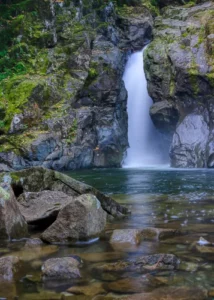
The first time I went to the Medicine Bowls in Courtenay, it felt like a
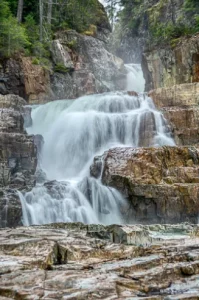
Lower Myra Falls is one of those places in Strathcona Park that feels far more