Long Exposure Photography: Control Motion in Your Photos
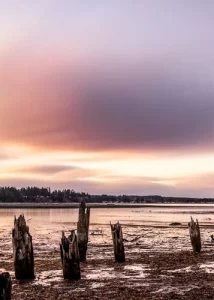
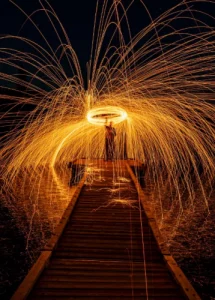
Long exposure photography is a technique that uses slow shutter speeds to capture silky smooth
Share the Love This Valentine’s Day – 25% Off
The first time I went to the Medicine Bowls in Courtenay, it felt like a bit of an adventure. This isn’t a place you come across by chance. It feels like the locals are trying to keep it a secret, and once you’re there, you understand why. Finding the waterfall isn’t difficult, but you won’t find any signs or an obvious trailhead.
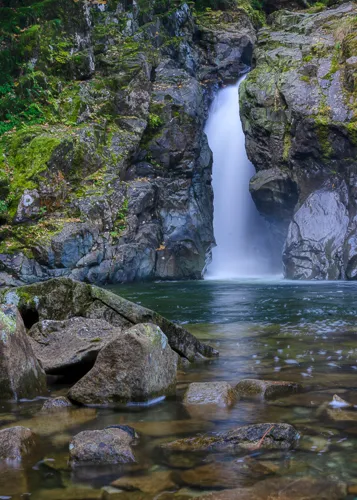
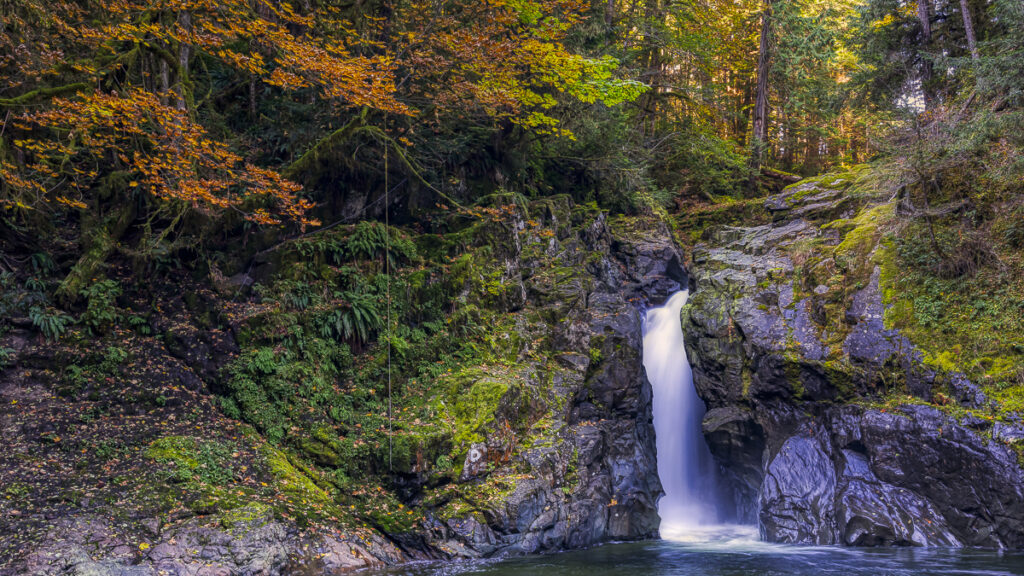
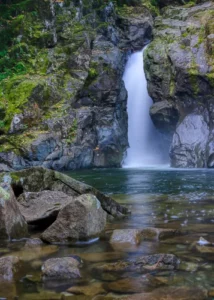
Once you arrive, the bowls reveal themselves in layers. Water drops through narrow rock channels into deep, still pools, with smooth stone worn down over time. Moss clings to the rock edges, and the water moves quietly between the bowls rather than rushing through. The rock walls rise just enough to make the space feel enclosed, and it’s easy to see why people stop and stay awhile.
The Medicine Bowls are a natural series of smooth rock pools formed by water moving through a narrow rock channel. Over time, the flow has worn the stone into rounded bowls that hold pockets of water at different levels. A small waterfall feeds into the area, sending water from one bowl into the next.
What sets the Medicine Bowls apart is how informal the setting is. The bowls, rock ledges, and pools are close together, which makes the area feel compact and quiet. The pools can look very different from one visit to the next, depending on the time of year and the water level. But the worn stone and layered rock give the place its character all year long.
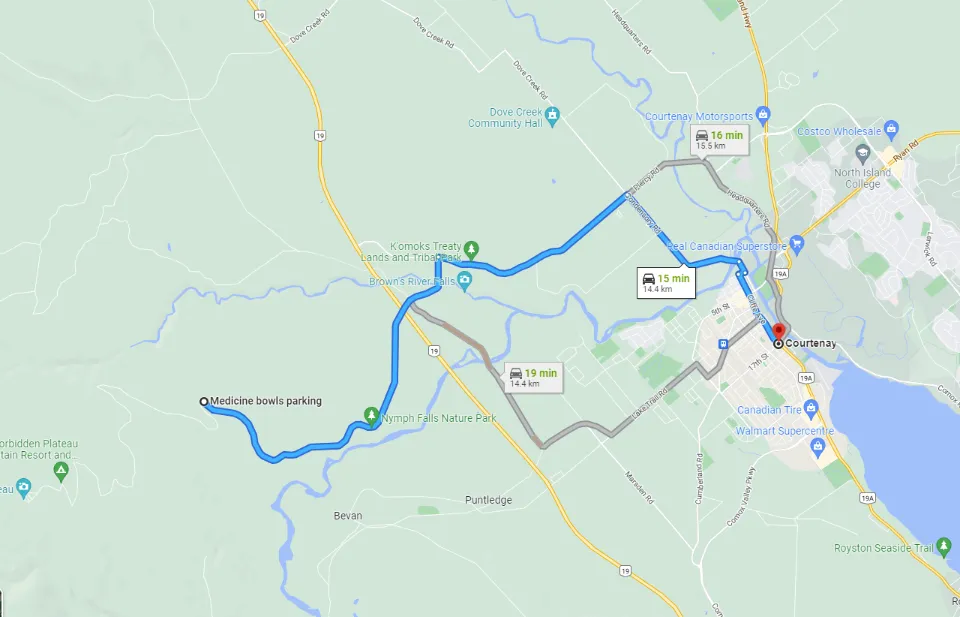
The Medicine Bowls are located just outside Courtenay area, along a back road that heads toward the Forbidden Plateau area. It’s close enough to town that the drive is short, but far enough off the main route that it doesn’t feel obvious or busy. This isn’t a roadside stop or a signed attraction, which is part of why many people miss it unless they already know where to look.
Access to the area is informal. There’s no marked entrance, parking lot, or official trailhead, and nothing along the road points out the waterfall or bowls. Because of that, the location tends to stay quieter than more developed spots nearby. Visitors usually arrive with some prior knowledge and a willingness to pay attention once they’re off the pavement.
I usually park before the logging road, at the end of the pavement. This is the area where you would chain up when the Forbidden Plateau ski hill was operating. There’s no formal parking lot, just informal roadside space.
From here, the walk-in is less than a kilometre; there’s no signage or marked trailhead to follow. But it’s easy to find.
It is possible to drive down the logging road to make the walk shorter. However, the logging road often has deep ruts and trenches that can stop vehicles well before reaching the bowls. If you own a 4×4, you can give it a try. There’s no guarantee you’ll make it all the way.
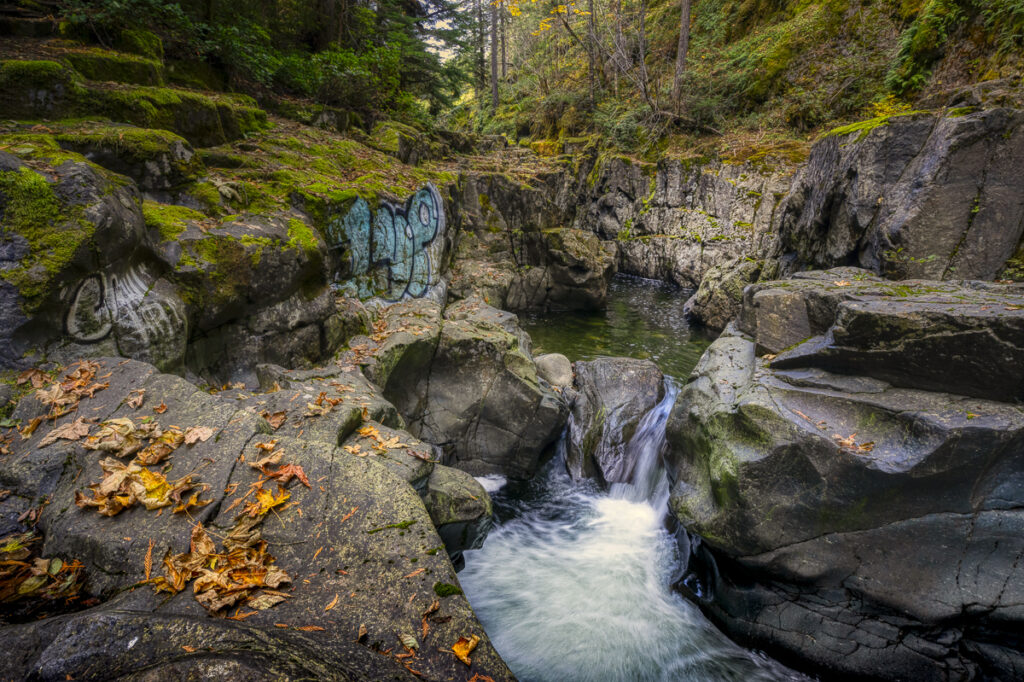
Once you reach the bowls, the area opens up around the waterfall and exposed rock. Water flows through narrow channels and drops into smooth, rounded pools at different levels. Some pools are calm and still, while others have a steady flow moving through them.
The rock is worn smooth in places and uneven in others. Moss clings to the edges, and fallen leaves often collect in the quieter pools. There are no built features, viewpoints, or railings. People tend to spread out along the rock, sitting near the water or moving carefully between the bowls depending on conditions.
Swimming conditions at the Medicine Bowls depend on Vancouver Island weather and the season. Water flow can change quickly, especially during spring runoff or after heavy rain. During spring, as the snow melts, water levels can rise significantly. This results in stronger currents and whirlpools, which pose a danger even to strong swimmers.
It’s also important to know that you don’t have to swim in the bowls themselves. There is a lower swimming area downstream. Getting down to this area takes a bit more effort and careful footing, but it can be a safer option when conditions allow.
Water levels and pool depth change from visit to visit. If the water is moving fast, looks unsettled, or is higher than expected, it’s best to stay out and enjoy the area without swimming.
There is a history of serious accidents here. A memorial plaque at the site acknowledges past drownings. In 1994, I lost a friend who was swimming here. Because of that, I’m cautious about when and where I enter the water.
...Bob
The Medicine Bowls here in Vancouver Island are a quiet, informal spot that rewards people who take the time to find them. Conditions change throughout the year, and water levels can make a big difference in how the area should be approached. It’s not a developed attraction, and that’s part of what makes it worth visiting.
Go prepared, pay attention to the conditions when you arrive, and treat the area with respect. You don’t need to do much here for it to be a good visit.
The Medicine Bowls are not always safe for swimming. During high water or strong flow, swimming in the bowls is not recommended due to dangerous currents and whirlpools. Conditions change often, so water levels should always be assessed before entering.
The walk to the Medicine Bowls is less than one kilometre from where most people park. There is no marked trailhead or signage, but the route is generally easy to follow if you know where to look.
There is no formal parking at the Medicine Bowls. Most people park at the end of the pavement before the logging road. Parking is informal, limited, and requires care to avoid blocking access.

Long exposure photography is a technique that uses slow shutter speeds to capture silky smooth

The first time I went to the Medicine Bowls in Courtenay, it felt like a

Lower Myra Falls is one of those places in Strathcona Park that feels far more