Share the Love This Valentine’s Day – 25% Off

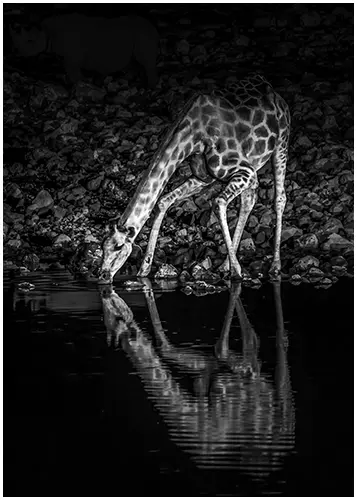
Giraffe drinking water in black and white. Example of the reciprocating rule in photography
Down Arrow

Photo 101: Understanding the Reciprocal Rule in Photography

Are you perplexed as to why some of your handheld photos appear blurry, even though you’re certain that you held the camera steady?

Understanding the workings of the reciprocal rule in photography may provide the answer. No time to set up a tripod? Then this rule is for you. 

Even a little movement can make your photos blurry. Knowing and using this rule can help you capture sharper photos, even in tough lighting.

Let’s discuss shutter speeds, lens lengths, and the interplay between the two to keep your photos tack sharp. Whether you’re just starting or have been doing this for years, learning the reciprocal rule can elevate your photography.

Key Takeaways

  • The reciprocal rule helps prevent camera shakes for handheld shots.
  • For sharper images, remember shutter speed is related to focal length.
  • Longer focal lengths require faster shutter speeds.
  • The rule is a starting point and may need adjustments based on how the reciprocal rule works.
  • Understanding this rule improves overall image quality.

Table of Contents

What is the reciprocal rule?

The reciprocal rule is a useful photography trick for getting sharp images when you’re holding the camera by hand. It’s a simple rule that links your lens’s length to the fastest shutter speed needed to avoid camera shake blur.

How the reciprocal rule helps photographers

This rule helps those who shoot without a tripod or prefer to hand-hold the camera. It’s a reliable guideline to reduce camera shake, thereby reducing blurred images.

According to the rule, your shutter speed should be at least the reciprocal of your lens’s focal length.

Lens Focal LengthMinimum Shutter Speed
50MM1/50s
100MM1/100s
200mm200s

The reciprocal rule is like a photographer's Swiss Army knife—simple, versatile, and incredibly useful in a pinch.

Mastering this rule gives you a solid foundation to figure out the slowest shutter speed for sharp images in different situations. It’s a crucial skill that can greatly improve your photography abilities.

The science behind the reciprocal rule

The reciprocal rule in photography is based on physics and human biology. It helps reduce camera shake by suggesting a shutter speed based on the lens’s focal length. For example, a 100mm lens needs a shutter speed of at least 1/100th of a second.

The connection between focal length and field of view forms the basis of this rule. Longer focal lengths mean a narrower field of view, making camera movements more noticeable. For this reason, the rule relies on the inverse of the focal length.

It also took into account the degree to which our hands shake when we hold a camera. The majority of people’s hands shake. The rule aims to counteract this movement.

What causes the camera to shake?

Camera shake happens when you move while holding the camera. Even small movements can make images blurry, especially with long lenses or exposures. Telephoto lenses will amplify the camera shake.

How does shutter speed affect image sharpness?

Shutter speed is one of the keys to sharp images. The shutter speed controls the duration of the sensor’s exposure to light. Faster speeds can help stop camera shakes.

Focal LengthShutter SpeedEffect on iImage
50mm1/50sBalanced sharpness
100mm1/100sReduce blur risk
200mm1/200sMinimal camera shake

Looking to stretch your budget? We’ve got good news! Save an additional 10% use code bwild10

The reciprocal rule can be calculated.

Learning how to calculate shutter speed is crucial for the reciprocal rule. This rule tells you the slowest shutter speed to use without camera shake. It helps you get sharp images.

Basic formula

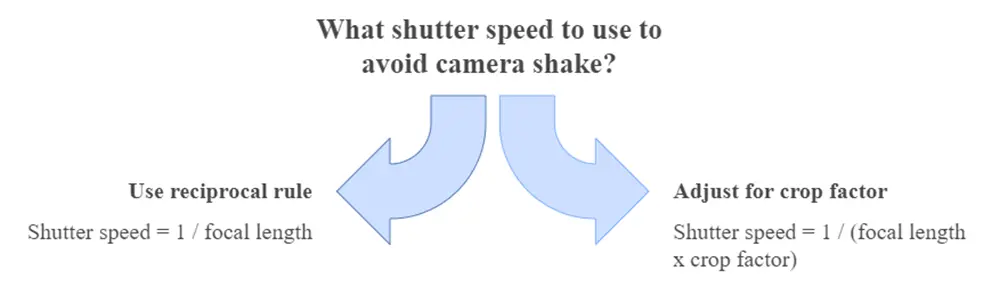
The formula is easy: just divide 1 by your lens’s focal length. Example: when shooting with a 50mm lens, use a shutter speed of at least 1/50 second.

Adjusting for sensor sizes

Camera sensors vary, and so does the rule. Full-frame cameras use the lens’s actual focal length. But crop sensors need more work. Multiply the focal length by the crop factor to find the effective focal length.

Crop factor cameras

Crop sensors are common in DSLR and mirrorless cameras. You need to take into account the crop factor for these cameras. Here’s a simple guide:

Sensor TypeCrop factorExample Calculation -Inverse of Your Lens's Focal Length.
Full-Frame1x100mm lens = 1/100s
APS-C1.5x100mm lens = 1/150s
Micro 4/32x100mm lens = 1/200s
Illustration of the reciprocating rule for photography.

For safety, always round up to the closest shutter speed. Using these calculations, you’ll take sharper photos with different cameras.

Modern tech has also changed how we use the reciprocal rule. Image stabilization systems can help use slower shutter speeds. These systems can offer 2–5 stops of stabilization, making the rule less strict.

PRO-TIP Don’t get too caught up in the math. 50mm= 50. The only time I really would take the time to work out the math is when I’m shooting with a 200mm or greater. 

The reciprocal rule contains limitations and exceptions.

The reciprocal rule is a useful guide, but it’s not perfect. We’ll look at when it might not work and how new camera technology changes its use.

When the rule falters

In tough shooting situations, the reciprocal rule might not work well. High winds can cause cameras to shake, even at faster shutter speeds. High-resolution sensors also make small movements more noticeable, needing faster shutter speeds than the rule implies.

For instance, with a 50MP camera, like the Sony A7RV, you might need 1/100s instead of 1/50s with a 50mm lens for clear images. It’s important to adjust the rule based on your gear and where you’re shooting.

Impact of image stabilization

Modern image stabilization and vibration reduction can really stretch the reciprocal rule’s limits. These features let you use slower shutter speeds and still get sharp images.

Shooting StyleAdaptation
shaky handsUse faster shutter speeds
Steady handsTry slower shutter speeds
Action photographyPrioritize shutter speeds
African elephant: example of where you might sue the reciprocal rule in photography

Advanced considerations

When using the reciprocal rule and your telephoto lens, focal length is crucial. Let’s look at how focal length affects your shots, as well as how to apply the rule with zoom lenses.

Focal length’s impact

Long focal lengths bring your subjects closer, which increases the likelihood of shaking. For clear images, you’ll need faster shutter speeds. For example, a 200mm lens might need a shutter speed of 1/200s or faster to avoid blur.

Telephoto lens techniques

You use the reciprocal rule with telephoto lenses to prevent softness in your photos. A 400mm lens requires a shutter speed of 1/400s or faster. For very long lenses (600mm or more), you might need to go beyond the rule’s advice. This is especially true for distant subjects where small movements can cause blur.

Focal LengthMinimum shutter speedRecommended Shutter Speed
200mm1/200s1/250s
400mm1/400s1/500s
600mm1/600s1/800s

For zoom lenses, use the longest focal length when applying the rule. This helps get sharp images across your entire focal range.

Typical errors occur when applying the reciprocal rule.

The reciprocal rule is useful but not perfect. Let’s look at some mistakes to avoid when using it.

Overlooking sensor size

Many photographers forget to adjust for different camera sizes, especially when using smaller sensors. If you have a crop sensor camera, make sure to use the crop factor. 

Ignoring the subject’s movement

The reciprocal rule only considers camera shake, not moving subjects. Fast-moving subjects need faster shutter speeds. Always think about how your subject moves when setting your shutter speed.

Overreliance on rules

Some photographers rely too much on the reciprocal rule. It’s just a starting point, but the reciprocal rule can provide a useful guideline. Your style, how you hold your camera, and the scene are all important.

Neglecting high-resolution cameras

High-resolution cameras need faster shutter speeds than the reciprocal rule states. Their high pixel count makes camera shaking more noticeable. For these cameras, use a shutter speed 2-3 times faster than the rule.

The reciprocal rule is a guide, not a rigid rule, but it helps to understand the inverse relationship between shutter speed and focal length. Avoid these mistakes to take sharp, beautiful photos in different situations.

Conclusion

While the reciprocal rule is useful, especially for beginners, it has its limits. The photographer’s skill, the environment, and other factors can affect the required shutter speed. Experienced photographers will start with this rule but adjust based on their situation.

When you’re holding the camera, it helps you choose the right shutter speed for sharp images. Using this technique, you can make your images sharper in different situations.

This rule is a starting point. With practice, you’ll adjust it to your camera and style. It’s important to practice this technique. With practice, you’ll know when to use it and when to break the rules.

The reciprocal rule is just one technique to use. When you mix it with others, you’ll see an improvement in your photography!

Frequently Asked Questions

Here’s the extended FAQ for “Photography 101: Understanding the Reciprocal Rule in Photography” with HTML formatting and highlighted terms:

What is the reciprocal rule in photography? The reciprocal rule is a guideline to help us avoid camera shake. It suggests setting the shutter speed to at least the reciprocal of the lens’s focal length. For a 50mm lens, use a minimum shutter speed of 1/50th second.

To apply the reciprocal rule:
1) note your lens focal length.
2) Calculate its reciprocal.
3) Set shutter speed to that value or faster.

For a 100mm lens, use at least 1/100th second. Adjust as needed for conditions and stability.

The reciprocal rule for crop sensors adapts to smaller formats by multiplying the lens focal length by the crop factor before applying. For example, on an APS-C camera with a 1.5x crop factor, a 50mm lens would use 1/75th second (50 x 1.5) as the minimum shutter speed.

Our Latest Blogs