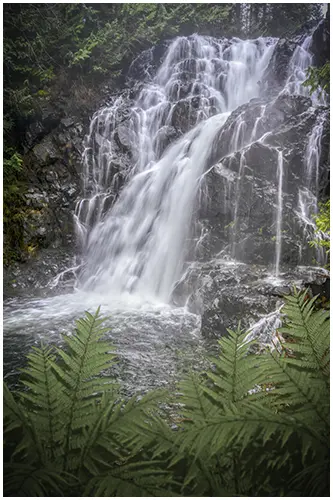
Browns River Falls: Hiking Guide (Comox Valley, BC)
I’ve been to Browns River Falls many times, and it’s one of those places I

Hunt for your perfect deal Easter sale on now! – 30% Off
Wondered why some photos seem “intriguing” while others seem kind of blah? The secret lies in image balancing, a cornerstone of creating captivating photographs. But what exactly is this elusive concept, and how can you harness its power?
Image balancing in photography is the art of crafting visual harmony within your frame. It involves arranging elements so not one dominates the image. Think of it as creating a seesaw of visual elements, where each side complements the other perfectly.
When you nail balance, you guide your viewer’s eye smoothly across the entire image. This doesn’t mean everything needs to be symmetrical. In fact, some of the most engaging photos use asymmetrical balance to create interest and depth.
Understanding composition and visual weight is key to mastering balance. It’s not just about where you place objects; it’s about how their colours, sizes, and even implied movements interact. A small, bright object might balance out a larger, darker one. It’s all about creating that perfect visual equilibrium.
Are you prepared to delve deeper into the realm of balanced photography? Let’s explore the key principles that will transform your shots into stunning, harmonious compositions.
Balance is all about making your images look good. It’s about arranging things in your frame so they all have the same importance. This means breaking down a scene into parts and giving each one its own weight.
There are different kinds of balance in photography. Symmetrical balance creates a perfect appearance, particularly in architectural shots. Asymmetrical balance adds excitement and tension to your photos. Colour and tonal balance also matter, as they affect how people interpret your image.
The rule of thirds is a big part of asymmetrical balance. It means putting your main subject off-centre. This creates interest and keeps the balance. Leading lines can also help guide the viewer’s eye, adding movement and harmony.
| Balance Type | Description | Common Use |
|---|---|---|
| Symmetrical | Equal weight on both sides | Architecture, Landscapes |
| Asymmetrical | Uneven distribution of elements | Portraits, Still Life |
| Radial | Elements are arranged around a central point. | Nature, Abstract |
Several factors, including the angle, settings, and distance between the subject and the camera, can affect the appearance of a photograph. It takes time to learn balance in photography.
However, this talent has the potential to significantly enhance the appearance of your images.
Visual balance is key to stunning photos. Mastering colours, sizes, values, and textures can boost your skills. These types of balance can enhance your images.
Colour is vital for a balanced image. Warm colours, like red, draw the eye forward. Red is the most attention-grabbing colour.
For balance, mix bright colours with neutral ones. This contrast makes your photo look appealing and guides the viewer’s eye.
Size balance deals with the weight of elements in your photo. Big objects seem heavier than small ones.
Pair big subjects with small ones. Remember, vertical objects feel heavier than horizontal ones. Diagonal lines carry more weight than straight ones.
Value balance is about light and dark areas. Dark areas feel heavier than light ones. Try contrasting light and dark areas for balance.
Isolated objects seem heavier than those with others around.
Texture balance adds depth. Mix smooth with rough textures for interest. In-focus areas carry more weight than out-of-focus areas.
Human elements, like faces, grab attention. They increase visual weight because we naturally look at people.
By using these visual balance tips, your photos will be more compelling. Try different combinations for each photo.
Looking to stretch your budget? We’ve got good news! Save an additional 10% use code bwild10
Here’s a quick guide to balancing elements in your photos:
Sometimes, purposely disrupting balance can create impact. Unbalanced compositions using dynamic tension or single leading lines can spark curiosity and draw viewers in. It’s all about controlling visual elements to contribute to your photo’s overall impact and interest.
Negative space is your friend. It emphasizes subjects and adds breathing room to your shots. Experiment with different compositional techniques like the golden ratio to find what works best for your style. Remember: tonal balance through colour can harmonize a seemingly imbalanced placement of subjects.
Remember, viewer perception ultimately determines if a photo feels balanced. Trust your eye, practice these techniques, and you’ll soon master the art of balance in photography composition.
Creating visual harmony in photography is all about achieving a balanced composition. This means understanding the tonal range of your image and mastering exposure techniques. By balancing shadows, highlights, and midtones, you can add depth and dimension to your photos.
Your camera’s histogram is a primary tool for visualizing tonal distribution. The histogram illustrates the distribution of light and dark areas in your image. Adjusting exposure, contrast, and brightness in post-processing helps fine-tune your image’s tonal balance.
Different photography genres require unique approaches to achieve balance.
Mastering these elements will help you produce visually striking and well-balanced images across various styles. The goal is to create a sense of visual harmony that draws viewers into your photograph.
Image balancing techniques are essential for outstanding photos. They help you create stories with your camera. It’s about making your photos look great by balancing colours, sizes, and textures.
When you learn about composition, don’t ignore colour temperature. A candle flame is warm, while a cloudy sky is cool. Knowing this can make your photos better.
Try balancing and unbalancing in your photos. Sometimes, symmetry works best. Other times, a little imbalance is better. The most important thing is to keep practising.
In photography, a symmetrical arrangement of elements, such as a mountain reflecting in a lake, creates visual harmony. Balance can also be asymmetric, using contrasting sizes or colours to evenly distribute weight and interest across the frame.
A poorly balanced photo can be visually unappealing, distracting, or lacking in harmony. Proper balance in photography ensures even distribution of elements, colours, and lighting, which enhances composition and viewer engagement. Unbalanced photos can feel awkward or off-putting, reducing their impact and effectiveness.
Balance in photos is crucial as it creates visual harmony, guiding the viewer’s eye naturally across the image. Proper balance, achieved through symmetry, asymmetry, or colour distribution, enhances the composition, evokes emotions, and ensures the photo feels stable and aesthetically pleasing, making it more engaging and impactful.

I’ve been to Browns River Falls many times, and it’s one of those places I

Colour is one of the most powerful tools in photography. It’s how people feel about
I’ve visited Trout Creek Falls multiple times over the years, and it’s one of those