Long Exposure Photography: Control Motion in Your Photos
Long exposure photography is a technique that uses slow shutter speeds to capture silky smooth
Share the Love This Valentine’s Day – 25% Off
Looking for the best filters for landscape photography? You’re in the right spot! These nifty attachments are like magic for your camera, transforming ordinary scenes into breathtaking vistas. Polarizing filters punch up colors and cut glare, while neutral density (ND) filters let you play with long exposures, turning waterfalls into silky curtains and clouds into dreamy streaks. Graduated ND filters are your secret weapon for balancing tricky lighting between the land and sky. With a bit of practice, you’ll be crafting jaw-dropping landscapes that’ll make your friends wonder if you’ve been touched by the photography gods!
Are you ready to make your pictures can pop! Get ready to capture scenes that look like they’re straight out of a dream!
Finding the perfect filters can greatly improve your landscape photos.
Lens filters are key for landscape photographers. They control light, enhance colours, and create amazing effects. There are many types of filters, each with its own role.
Three main types of filters are crucial for landscape shots:
When selecting landscape lens filters, keep the following factors in mind:
| Factor | Consideration |
|---|---|
| Filter quality | High-quality filters control the light entering the lens to keep images sharp and prevent colour changes. |
| Size | It must be compatible with your lens or filter holder system. |
| Compatibility | Make sure the filters fit your camera and lens setup, including the filter thread. |
| Ease of Use | For ease of use, look for screw-on, square, or magnetic systems. |
Understanding these points will help you pick the right filters for your system.
Download your free trial today!
Neutral-density filters are a big deal for us landscape photographers. They give you more control over when the light hits the sensor. Reducing the light opens up new ways to be creative, and ND filters can help achieve this effect.
Too much sunlight can overexpose your photos, making them look hazy. Using an ND filter can help manage light levels. You can capture images with broader apertures or slower shutter speeds without sacrificing detail in the bright regions.
| Filter Strength | Light reduction (stops) | Ideal Use Case |
|---|---|---|
| ND2 | 1 | Subtle motion blur in bright conditions |
| ND8 | 3 | Smoothing water movement in rivers |
| ND64 | 6 | Creating misty waterfall effects. |
| ND1000 | 10 | Extremely long exposures for cloud movement |
ND filters are excellent for making dreamy long-exposure photos. They let you use slower shutter speeds in bright scenes. This is ideal for creating that ice-rink look or adding a silky feel to waterfalls.
With a 10 or 15-stop ND filter, you can increase your shutter speed to seconds or even minutes. This turns normal scenes into magical landscapes.
The purpose of GND is to balance the exposure differences between a bright sky and a dark foreground. Not only do they balance the scene, they also help capture stunning landscapes by enhancing the dynamic range and revealing the intricate details in the scene.
GND filters have soft and sharp edges. Soft-edge filters are ideal for scenes with uneven horizons. Hard-edge filters work best for straight horizons. These filters help you get the right exposure in all parts of your photo, keeping details in bright and dark areas.
Looking to stretch your budget? We’ve got good news! Save an additional 10% use code bwild10
Polarizers are like sunglasses for your camera.
Polarizers enhance your photos by reducing reflections and saturating the colors. Let’s explore how a polarizing filter can make your landscape photos stand out.
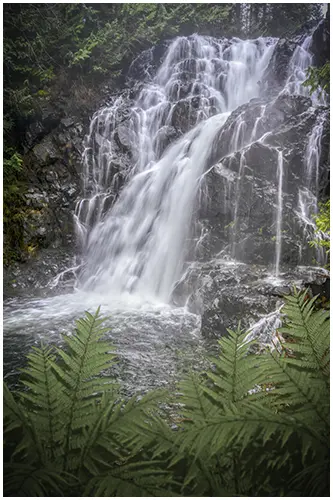
With a polarizing filter, you can control reflections on water, rocks, and leaves. Turn the filter to change how much polarization you want. This is ideal for waterfall photography. Polarizers enhance the blues and greens in your landscapes.
Polarizing filters are beneficial for the skies. They enhance the depth of blue skies and the visibility of clouds. However, they work best when used at a 90-degree angle to the sun. A polarizer improves forest photography by reducing glare on wet leaves, resulting in richer greens and more detailed forest scenes.
Polarizing filters do more than just saturate colours. They improve your photo’s quality by cutting through haze and adding depth.
| Effect | Without Polarizer | With Polarizer |
|---|---|---|
| Sky | Light blue | Deep rich blue |
| Water reflections | Strong, obscuring | Using a polarizing filter reduces glare, revealing underwater features. |
| Foliage | Dull green with glare | Vibrant green, more detailed |
| Contrast | Normal | Increased, more depth |
Mastering polarizing filters can take your landscape photography to the next level. To see their amazing effects, try them out in different scenes and lighting.
When it comes to capturing the beauty of a sunset, we often face the challenge of balancing the bright sky with the darker landscape. This is where a graduated neutral density filter becomes an invaluable tool. By seamlessly transitioning from dark to clear, it allows you to reduce the exposure in the sky without affecting the foreground.
This preserves both the vibrant hues of the sunset and the details of the landscape, resulting in a balanced exposure. Using a GND filter can transform a ho-hum sunset shot into a masterpiece, showcasing the full dynamic range of the scene in all its glory.
We have to talk about vignetting when using filters, especially with wide-angle lenses. To help avoid this, opt for square or rectangular filters.
| Filter Type | Best For | Key Feature |
|---|---|---|
| Soft-edge GND | Irregular horizons | Gradual transition |
| Hard-edge GND | Straight horizons | Sharp transition |
| Reverse GND | Sunsets/Sunrises | Densest in the middle |
Filters can make your landscape photos look amazing. But they also have some challenges. Let’s look at common issues and how to fix them.
Stacking filters might seem good, but it’s not always the best. Too many filters can make your photos blurry and cause unwanted dark corners. Try to use only two or three high-quality filters at a time. This keeps your photos sharp and clear.
Vignetting is a big problem, especially with wide-angle lenses. To avoid this, choose filters that fit your lens. For wide lenses, consider a bigger filter holder. Magnetic filters are popular because they’re simple to use and prevent mistakes when attaching them to your lens.
To keep your photos sharp, clean your filters. I also recommend keeping the filter in a separate case and not loosely dropping it into your camera bag.
UV filters are excellent for protecting your camera lens from dust and scratches. Furthermore, they help to mitigate the haze caused by ultraviolet light, particularly in photographs taken outdoors.
Pros of Using a UV Filter:
Cons of Using a UV Filter:
Pro-Tip: I've stopped using the UV filter for landscape photography. I've already added a polarizer and maybe an ND. A UV filter is just another piece of glass on the lens. However, they are ideal for newbies who need extra protection for their lenses.
Pro-Tip
Mastering the use of filters for landscape photography can significantly elevate your photography. With polarizing filters to reduce reflections, neutral density filters to control light, and graduated ND filters to balance exposure, these tools offer immense creative possibilities.
Incorporating these filters into your gear can save time in post-processing and enhance the quality of your images. Experiment with different filters to discover how they can transform ordinary scenes into breathtaking landscapes.
Yes, you should use a polarizer for landscape photography. It reduces reflections, enhances colours, and deepens blue skies, resulting in more vibrant and detailed images.
For landscape photography, use a polarizing filter to reduce reflections and enhance colours, a neutral density (ND) filter to allow longer exposures in bright light, and a graduated ND filter to balance the exposure between the sky and ground.
The most commonly used ND filter for landscape photography is the ND8 filter. It reduces light by 3 stops, making it ideal for creating smooth water effects and capturing long exposures in various lighting conditions.

Long exposure photography is a technique that uses slow shutter speeds to capture silky smooth

The first time I went to the Medicine Bowls in Courtenay, it felt like a

Lower Myra Falls is one of those places in Strathcona Park that feels far more