
Stokes Creek Falls in Port Alberni: Trail Guide & Directions
Some places are easy to miss, even when you know the area well. Stokes Creek
Grand Opening & Black Friday Sale = 50% Off


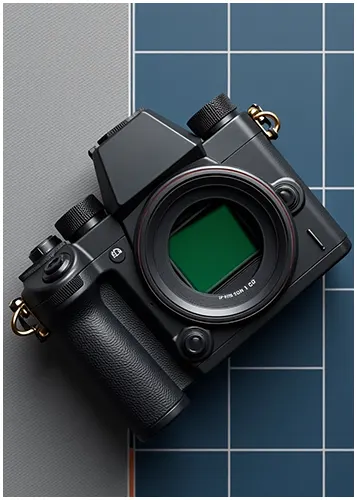

How does stacked sensor vs. global shutter technology impact your photography? What is the actual difference, and why might it be important to you? While most digital cameras utilize Complementary Metal-Oxide-Semiconductor (CMOS) sensors to convert light into digital information, global shutter technology stands apart by capturing every pixel at the exact same moment.
These two innovative sensors are revolutionizing photography. They aren’t just fancy terms; they’re the key to getting sharper, clearer photos and videos, especially when things are moving fast.
In this article, we’ll break down what makes each special and help you understand which one might be better for your photography needs.
Understanding this fundamental distinction is crucial for selecting the optimal camera to meet your specific photographic demands.
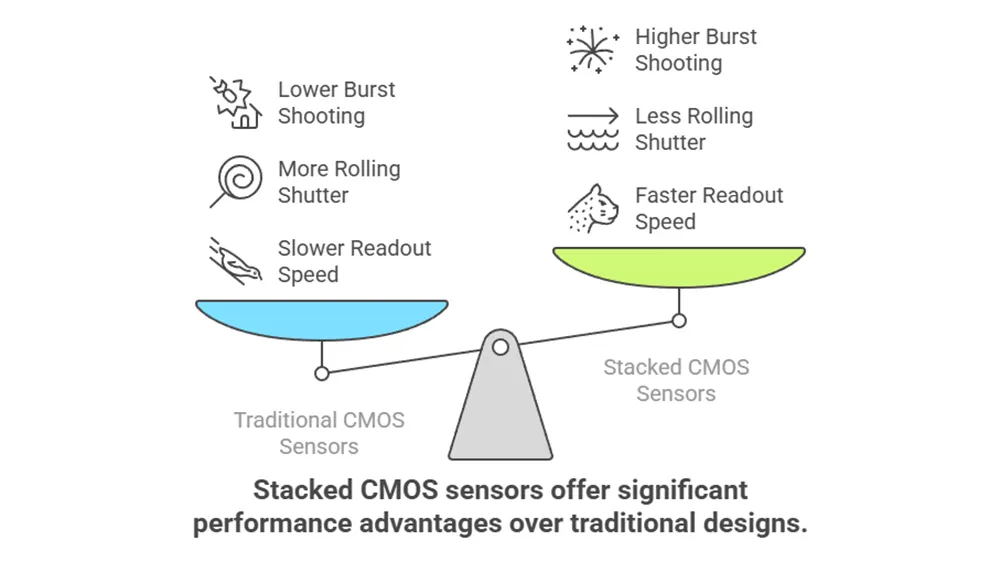
Stacked CMOS sensors are a big leap in camera tech. They bring speed and performance to your camera. These sensors are the next step in sensor technology, building on traditional and BSI CMOS designs.
Imagine a stacked sensor as a multi-story building. It stacks components in layers, unlike traditional designs. This design makes these sensors more efficient.
A stacked CMOS sensor works differently than earlier CMOS sensors. In the old designs, light-capturing pixels and processing circuitry are on one layer. This older design causes the signal to travel longer distances.
Stacked sensors have:
This design cuts down signal travel. When light hits, data goes straight to the processing layer. This design makes processing faster and improves readout speed.
Stacked sensors offer many benefits for your photos and videos:
Sports, wildlife, and action photography benefits the most. They also help videographers by reducing motion artifacts and allowing for higher frame rates.
While a stacked design improves efficiency, sensor size is still relevant for image quality. Full-frame stacked sensors have big advantages:
They have larger photosites that capture more light. This means better low-light performance and dynamic range. You’ll see less noise at high ISOs and more detail in shadows and highlights.
Smaller stacked sensors, in some mirrorless cameras and smartphones, still enjoy speed benefits. But they can’t match the quality of larger sensors in tough lighting.
Sensor size and image quality follow the same rules in stacked sensors as in old designs. This means a smaller stacked sensor could outperform a similar conventional sensor.
Camera makers usually put stacked sensors in their top models. Due to the complexity and high cost of manufacturing. You’ll find full-frame stacked sensors in most high end cameras for demanding users who are looking for both speed and quality.

Looking to stretch your budget? We’ve got good news! Save an additional 10% use code bwild10
Global shutter technology changes how cameras capture light. Unlike CMOS sensors, global shutters captures all pixels at once. It is said that the images are sharp, clear, and without any distortion.
Global and rolling shutters work differently. Rolling shutters scan line by line, like a photocopier.
They capture all pixels at once, limiting distortion, and increasing your chances of a perfectly tack sharp image.
Global shutters solve these problems. Your photos stay sharp, no matter what. This is why they’re ideal for action shots.
| Feature | Global Shutter | Rolling Shutter (CMOS) | Impact on Photography |
|---|---|---|---|
| Capture Method | All pixels simultaneously | Line-by-line scanning | Geometric accuracy vs. potential distortion |
| Moving Subject Accuracy | Perfect representation | Potential skew/distortion | Critical for action photography |
| Flash Sync Speed | Ultra-high up to 1/80,000 | Limited (typically 1/200s) | Greater creative control with artificial lighting |
| Current Limitations | Slightly reduced dynamic range | Motion artifacts | Trade-off between perfect timing vs. tonal range |
Yes! There is a trade off. It can affect how well a camera captures both bright and dark areas in a single shot. Currently, global shutters can’t match the dynamic range of a staked sensor.
The Sony a9 III is a solid example. It’s fast and captures motion but doesn’t have the best dynamic range. Still, many photographers think it’s worth it for the video.
This tech is still new, expect improvement in the coming years.
Global shutter tech used to be only for special cameras. But now, it’s in some consumer cameras. The Sony a9 III is the first full-frame mirrorless camera.
The Sony a9 III is a big deal. It can shoot 120 fps at full resolution. It also has super-fast flash sync speeds up to 1/80,000 second.
Other big camera brands like RED, Blackmagic Design, and Canon also have global shutter options. These global shutter options are intended for serious video work, particularly in situations where distortion poses a significant problem.
Industrial and scientific cameras often use global shutters, too. They need it for precise timing in things like machine vision and research. As tech gets better prices will drop, we’ll should see more global shutter cameras in the consumer market soon.
Global shutter cameras are excellent for capturing fast-moving subjects without distortion. They solve problems photographers and videographers face when shooting dynamic scenes. This includes sports events or any subject in rapid motion.
Rolling shutter distortion can be avoided when shooting with a camera using a global shutter technology. Unlike traditional sensors, global shutters expose all pixels at once. Preventing the skewing and warping seen in fast-moving subjects.
Cameras with rolling shutters can make moving objects appear slanted or distorted. The reason for this the camera records the top of the image before the bottom. Global shutters capture every pixel at the same time, solving this problem.
Photographing a speeding car or a helicopter with spinning blades is easier with global shutters. They ensure these objects keep their shape, no matter their speed or your shutter speed.
This technology also gets rid of the “jello effect” in video footage. This effect happens during quick pans or when filming subjects in motion. The result is clear, accurate images of moving subjects.
Readout speed is how fast a camera can process pixel information after exposure. In global shutter cameras, this speed is important for several factors.
Fast readout speeds allow for higher frame rates. Crucial for shooting sports, wildlife, or any high-speed action.
Quick data processing also improves autofocus performance. Meaning your camera can track moving subjects more precisely. Leading to more keepers when photographing unpredictable action.
Another benefit is reduced latency between captures. less waiting for the camera to process one image before taking another. Can be the difference between capturing or missing a moment.
Video creators benefit from global shutter technology. The most obvious improvement is the elimination of rolling shutter artifacts. Making your footage look professional and without distractions.
Solves the common issue of flash banding when recording under flickering lights. Since all pixels are exposed at once, artificial light affects the entire frame consistently. This prevents the horizontal bands of different exposure levels seen in traditional cameras.
Drone operators and action videographers love global shutter cameras. They ensure smooth footage, even during aggressive manoeuvres or when filming high-speed subjects. This stability means less need for post-processing to correct distortion.
High-end video production benefits from global shutters’ precise frame timing. This timing is critical when synchronizing multiple cameras or matching footage with special effects.
Improved readout speed of global shutter sensors reduces lag. This real-time feedback helps you compose shots more accurately when recording.
Whether you’re shooting a documentary, commercial work, or narrative films, using a camera with a global shutter improves your production value. It lets you focus on creative decisions without worrying about technical limitations.

Knowing your photography need will help you decide on which shutter system will fit your style and budget.
When picking a sensor, consider a few important things. Sensor size is crucial, bigger sensors capture more light, means better photos, in tough lighting.
Resolution, measured in megapixels, also important. More megapixels mean sharper images for larger prints or cropping. But too many pixels can cause noise, which is undesirable in low light.
Readout speed is vital for fast action shots. Faster speeds mean less distortion and more frames per second. Great for sports, wildlife, and grand kids photos.
Dynamic range is how well a sensor handles light and dark areas. Landscape photographers want high dynamic range for detailed shots in all lighting scenarios.
Think about what you like to shoot when choosing a sensor.
Your sensor choice changes how your camera handles images. Different sensors handle light in unique ways. Affecting colour, noise, and dynamic range.
The sensor’s pixel design is key to converting light into electrical signals. Better sensors gather more light, leading to cleaner images at high ISOs.
Colour reproduction varies according to sensor type. Some are better at skin tones, while others capture landscapes well. Camera manufactures adjust their algorithms for each sensor.
Stacked sensors are a big plus for image processing. They allow for faster data handling and better autofocus. Meaning quicker and more accurate tracking of subjects.
Global shutter capture all pixels at once. removing rolling shutter distortion. Ideal for fast-moving subjects and consistent exposure, making post-processing easier.
Both stacked CMOS and global shutter sensors offer big improvements for photographers. Stacked sensors give you speed and better autofocus, while global shutters remove distortion and are great for fast motion and video.
The best sensor depends on what you like to shoot. If you need high speed and low-light performance, stacked might be best. If you want clean, distortion-free images of moving subjects, global shutter is the way to go

Yes, a stacked sensor is generally better, particularly for speed. It significantly improves readout speeds by stacking the image signal processor and memory directly behind the pixel layer, leading to faster continuous shooting, better autofocus, and reduced rolling shutter distortion
What are the disadvantages of global shutter? Global shutters often come with higher costs, reduced low-light sensitivity, lower dynamic range, and increased power consumption compared to rolling shutters. This can result in more noise and limitations in certain shooting conditions.
Some places are easy to miss, even when you know the area well. Stokes Creek

As we get older, our colour vision changes, and the result affects our life, including

Trent River Falls is a short but rewarding hike just outside Courtenay on Vancouver Island.