
Spinning Fire: A Guide to Steel Wool Photography
I think steel wool photography creates some of the most amazing images you can capture
Share the Love This Valentine’s Day – 25% Off


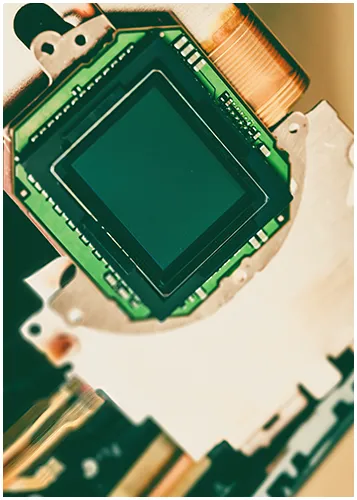

The digital camera market has two main sensor types: stacked sensor vs unstacked. Depending on which you choose the design of these sensors impacts everything from how fast you can shoot to how well the camera focuses.
Knowing the difference between these sensor types helps you choose the right camera. It’s why pros pick certain cameras for specific jobs. As we dive deeper, you’ll see how these tech differences make a big difference in real photography.
Stacked CMOS sensors are at the forefront of camera tech. Their layered design keeps the light-capturing parts separate from processing circuits. What is the difference? Older sensors had everything on one plane.
This new design changes how cameras capture and process images. It’s a big step forward since the introduction of BSI technology.
A stacked CMOS sensor has its parts in different layers, i.e., stacked together. The top layer has photodiodes that catch light. These turn light into electrical signals, starting the digital image process.
Below the light-capturing layer is a processing layer. It has transistors, memory, and converters that work on the signals. This setup lets each layer focus on its job.
Thousands of tiny channels called through-silicon vias (TSVs) connect the layers. Data can move between layers more quickly, resulting in faster data reading.
Many stacked sensors also use BSI technology. This flips the semiconductor substrate to get photodiodes closer to light. It makes catching light more efficient and reduces signal loss.
Stacked sensors are faster than old designs. They read data up to 20 times quicker because of the dedicated processing layer and its close position to photodiodes.
They also reduce rolling shutter distortion, meaning less “jello effect” when capturing fast subjects.
Stacked sensors handle noise better. By separating light-sensitive parts from heat-generating components, thermal noise is reduced, leading to cleaner images in tough lighting situations.
These sensors can do on-sensor operations like buffering, noise reduction, and image processing. All this happens before data leaves the sensor.
Modern cameras need to be better, and stacked sensors deliver. Their quick reading speeds make them ideal for action photography. This prevents viewfinder blackouts when shooting at fast speeds.
For video, stacked sensors offer better rolling shutter performance. They’re great for fast-moving scenes, like sports or wildlife. because they can handle high frame rates without distortion.
Stacked sensors also support advanced features like real-time tracking autofocus. Key for making quick focusing decisions. It’s a big advantage for photographers and videographers.
Professional and high-end cameras often use electronic shutters for silent shooting and faster bursts. Stacked sensors do well in this area, matching or beating mechanical shutters without their drawbacks.
As cameras get smarter, stacked sensors’ processing power is crucial. They enable features like HDR compositing, focus stacking, and AI-enhanced image processing.

Download your free trial today!
Unstacked sensors have been a staple for photographers for years. Yet, their design has several drawbacks that stacked sensors aim to fix. The main problem is their layout, where photodiodes and circuitry are on the same layer. This setup limits how fast they can read out data and how much light they can capture.
Designing unstacked sensors means making tough choices. Every bit of space for circuitry means less room for photosites to capture light. This trade-off makes unstacked sensors less efficient than stacked ones.
The single-layer design also slows down data processing. When taking a photo, the data must travel across the sensor before processing. This process slows down operations, making it harder for continuous shooting or video.
Image quality differences between an unstacked and stacked sensors are clear. Both can do well in good light, but unstacked sensors come with less dynamic range. Makeing it a challenge to capture details in both bright and dark areas of a photo.
Unstacked sensors also have less room for noise reduction circuitry. This means more visible noise, like speckles or grain, in photos taken at high ISOs.
Colour accuracy can also vary between the two types. Unstacked sensors might show colour shifts in mixed lighting. Affect how colours appear in your photos.
| Image Quality | Unstacked Sensor Performance | Stacked Sensor Advantages |
|---|---|---|
| Dynamic range | More limited in high-contrast scenes | Better highlight and shadow retention |
| Noise handling | More visible noise at higher ISOs | Superior noise reduction capabilities |
| Colour accuracy | Potential colour shifts in mixed lighting | More consistent colour reproduction |
| Detail retention | Good in ideal conditions | Better preservation in challenging scenarios |
Low-light photography is tough for unstacked sensors. With less space for photosites, they struggle to capture light in dim conditions. This affects their sensitivity in low light.
Increasing ISO settings to brighten up scenes introduces more noise. This is because unstacked sensors have limited processing power. You’ll see this most in indoor or nighttime shots without extra lighting.
Readout speed is another issue in low light. Slower readout means longer exposures, which can blur moving subjects.
Heat generation is a challenge in low light. Long exposures or high ISOs generate more heat. This heat can add noise to your images

It’s about speed when photographing fast-moving subjects. Stacked sensors have improved how cameras detect and track subjects.
When shooting sports or wildlife, the autofocus system must work fast. It needs to find the subject and adjust the lens quickly. Stacked sensors can do those tasks much faster than older units.
Stacked sensors have special layers for focusing. This lets the camera track subjects while getting ready for the next photo. This feature makes the camera more responsive to fast action.
Readout speed is a priority for autofocus. It’s how fast a sensor can send image data for processing. Stacked sensors are up to 20 times faster than old designs.
This speed boost helps in many ways:
Faster readout means the camera can focus more often. Why? It can do phase-detection autofocus (PDAF) calculations more frequently.
Speed also helps with features like eye-tracking. Your camera can now track specific objects better, even if they’re hidden.
For sports, wildlife, or fast action, stacked sensors are a big plus. They offer fast readout speeds and dedicated processing power. Allowing autofocus to keep up with unpredictable movement.
Older sensors might struggle with fast-moving subjects. They might lag or hunt back and forth. Stacked sensors reduce these problems.
Stacked sensors also work well in low light. They maintain their autofocus advantages even when it’s dark.
| Autofocus Aspect | Stacked Sensor Performance | Unstacked Sensor Performance | Real-world Impact |
|---|---|---|---|
| Tracking Speed | Very High (120-240 fps) | Moderate (30-60 fps) | Better keeper rate for action sequences |
| Subject Recognition | Advanced (faces, eyes, animals) | Basic to moderate | More precise focus on critical elements |
| Low-light Performance | Maintains accuracy in dim conditions | Degrades significantly | Extended shooting hours and locations |
| Continuous Shooting | Maintains focus at 20-30 fps | Limited to 5-10 fps with accurate focus | Capturing decisive moments in sequences |
Unlike DSLRs, mirrorless cameras use the main sensor for focus. Faster sensors mean better autofocus.
Dynamic range is the range between the brightest and darkest parts of an image. Traditional sensors have set a standard. But stacked sensors, with their layered design, bring new factors into play.
Stacked sensors separate photodiodes from circuitry, allowing for more light collection. This is a positive step in image quality in tough lighting. With dedicated layers, sensors handle complex processing better. meaning more details in your images.
Now for the drawback: they are complex to manufacture. Aligning layers and connecting them with tiny wires is a manufacturing challenge. This might explain the rarity of full-frame stacked sensors, as it could affect image quality.
Image noise is a big problem in digital photography, more so in low light. Stacked sensors offer several benefits that can reduce noise.
The separation of photodiodes from circuitry in stacked sensors reduces electronic interference. This interference creates noise in traditional sensors. Stacked sensors, with less interference, can lead to cleaner images, even at high ISOs.
Stacked sensors also read data faster, which reduces thermal noise. This is a big plus in high-speed burst modes, where traditional sensors might produce more noise.
Not all cameras benefit equally from stacked sensors’ noise reduction. High-end mirrorless cameras see the most improvement. But smaller sensors, like those in APS-C cameras, might not see the benefits as much.
While stacked sensors can reduce noise, real-world results depend on many factors. The camera’s processing engine, firmware, and sensor size all play a role. Some manufacturers might prioritize speed over noise reduction, depending on the camera’s purpose.
Stacked sensors have changed digital cameras in amazing ways. They solve old problems and open new doors for creativity. Their faster readout speeds have made shutters work better in tough shooting conditions.
Old cameras had trouble with shutter coordination. Stacked sensors fix this with their fast processing and data transfer. This change affects both electronic and mechanical shutters a lot.
Electronic shutters with stacked sensors eliminates some of the distortion. Now, you can take clear photos of fast-moving subjects without distortion.
Using electronic shutters with stacked sensors has many benefits.
Stacked sensors and mechanical shutters work well together. You get the best of both worlds. Use the mechanical shutter for flash and artificial light, and the stacked sensor for fast readout and processing.
Global shutters are the next step in shutter technology. They capture all pixels at once, not in a scanning motion. With stacked sensors, they offer amazing features:
Choosing between electronic and mechanical shutters depends on your photography needs. Electronic shutters are great for silent shots and fast bursts. Mechanical shutters are best for studio work and flash photography.
Stacked sensors have made electronic shutters a top choice for many. This technology keeps getting better, pushing what’s possible in digital photography.
In summary, stacked sensors have revolutionized the field of camera technology! By separating how light is caught from how images are processed, they unlock incredible speed, amazing autofocus, and super-clean pictures, even in tough conditions. This means no more blurry action shots or struggling in dim light.
While unstacked sensors had their moment, stacked sensors are clearly leading the charge, making cameras smarter, faster, and more powerful than ever. Get ready to capture the world in ways you never thought possible; the future of photography is here, and it’s electrifying!

I think steel wool photography creates some of the most amazing images you can capture

Long exposure photography is a technique that uses slow shutter speeds to capture silky smooth

The first time I went to the Medicine Bowls in Courtenay, it felt like a