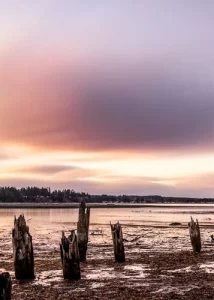
Long Exposure Photography: Control Motion in Your Photos
Long exposure photography is a technique that uses slow shutter speeds to capture silky smooth

Share the Love This Valentine’s Day – 25% Off
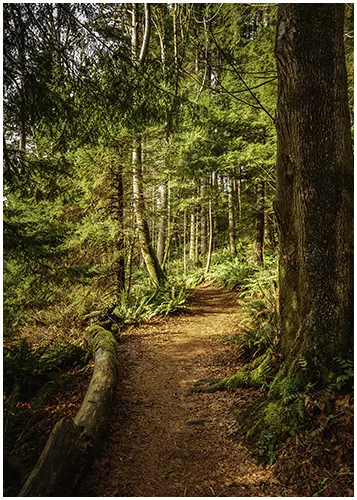
Imagine walking through a dense forest; the sunlight filters through the trees, casting shadows on the floor. A peaceful moment brimming with beauty awaits your photo skills.
As a photographer, you know framing is important. Natural framing lets you use the forest’s elements as leading lines to tell your story. This guide will show you how to use these techniques to connect with your audience.
Natural framing uses branches, leaves, or fog to bring focus to your main subject. It makes your photos more engaging and beautiful. Your viewers will feel like they’re part of the scene, thanks to the depth and detail in your photos.
Whether it’s autumn’s colours or a misty morning, natural frames can make your photos stand out. In this guide, we’ll cover finding the best frames, using them in your photos, and tips for light and layers.
Natural framing uses nature’s elements, like branches and leaves, to frame your photos. It’s about using what’s around you to make stunning images. Learning framing basics helps you focus on your subject and draw the viewer’s eye.
Natural frames guide the viewer’s gaze. In forests, trees, leaves, and rocks are common frames. They help keep your photo clear and focused.
Using natural frames well can reduce visual clutter, making your subject stand out.
Natural frames add depth and context to photos. They turn simple shots into stories. By layering your composition with leading lines, you invite the viewer to explore the scene.
Using colours that match the frame can make your photo look better.
The success of natural framing depends on the subject’s distance and your camera. Even simple cameras can take excellent photos.
| Framing Elements | Role in Composition | Benefits |
|---|---|---|
| Trees | Form natural arches | Enhance depth perception. |
| Leaves | Create borders | Focus Viewers attention |
| Rocks | Framed landscapes | Add context and interest |
| light | Highlight subject | Enhance image quality |
| Open space | Contrast with subject | Minimize distractions |
Download your free trial today!
When you’re in the forest, you might wonder how to find natural frames. It’s all about paying attention and understanding your surroundings. Learning to spot these compositional techniques can make your forest photography fun and rewarding.
Start by looking at the landscape from different sides to discover unique framing elements. Look for natural frames like:
Also, think about the light. The golden hours, just after sunrise or before sunset, are great. Lighting makes textures and colours pop.
To improve your chances, planning is essential. Use Google Earth to check out places before you go. Here are some tips for finding excellent spots:
| Type of Framing | Best Time to Shoot | Aperature Settings |
|---|---|---|
| Overhanging Branches | Golden Hour | F/5.6 |
| Tree Hallways | Early morning | F/11 |
| Water reflections | Late Afternoon | F/8 |
The right subject selection can set the mood. Here’s how to use natural framing in your forest photos.
Start by picking something that stands out, like a unique tree or colourful foliage. You want something that tells a story. Trees can frame your photo, guiding the viewer’s eye. Think about adding rocks or streams to make your subject more interesting.
After picking your subject, try different camera angles. A small change can make a big difference. Move a bit to the left or right to change the balance.
Avoid merging tree trunks in your frame. You want clear shapes that stand out, making your photo more striking.
Try placing your camera on a log to avoid merging trunks and improve your composition. Small changes can improve your photo. It makes your image not just pretty but also engaging.
In forest photography, making your image stand out is key. Light and shadow are vital for improving your composition in forest photography. They add drama and depth, making your photos special.
At the core of photography is light and shadows, which can elegantly accentuate your main subject. Turn your vision into something magical with dappled light across leaves.
To add depth, layer your elements. Use foreground, mid-ground, and background elements. This makes your photo captivating and invites viewers in.
Are you prepared to explore the world of forest photography and discover new compositional techniques? Let’s talk about gear and post-processing techniques that can enhance your photography composition. The right gear makes a big difference. A good camera is key, but lenses are just as important.
A telephoto lens helps with tight shots and less distortion, making it an essential tool for any photographer. It’s ideal for tree trunks or isolating subjects. For wide views, use a lens wider than 35 mm. It captures big scenes and rows of trees well.
Don’t forget tripods and filters. A strong tripod is a must for slow shutter speeds in dark woods. A polarizing filter cuts glare and boosts contrast, perfect for bright days.
After taking your photos, it’s time to edit. Use software to enhance colours, adjust exposures, and crop. Keep your natural framing while tweaking contrast to make your photos stand out. Let your creativity shine and show off nature’s beauty!
Natural framing transforms ordinary forest photos into captivating stories. By using trees, branches, and leaves as frames, you can guide viewers through your images and highlight key subjects. Remember to scout locations in advance, shoot during golden hour, and experiment with different angles.
Whether you’re a beginner or an experienced photographer, these framing techniques will help you capture the forest’s magic. Pack your camera, head into nature, and start creating photos that showcase the beauty around you.
What is the rule of framing in photography? Framing uses elements within a scene—like arches or foliage—to surround your subject, drawing the viewer’s eye and creating a more compelling composition. It adds depth and context to your photos.
What are the three types of framing in photography? They are natural framing (using elements like trees or arches), implied framing (using lines or shapes to create a frame), and framing with depth (creating a foreground, middle ground, and background).

Long exposure photography is a technique that uses slow shutter speeds to capture silky smooth

The first time I went to the Medicine Bowls in Courtenay, it felt like a
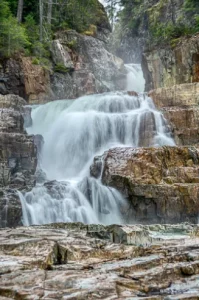
Lower Myra Falls is one of those places in Strathcona Park that feels far more