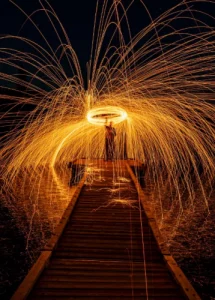
Spinning Fire: A Guide to Steel Wool Photography
I think steel wool photography creates some of the most amazing images you can capture
Share the Love This Valentine’s Day – 25% Off




Have you ever looked at a black-and-white landscape photo and wondered how it all began? Well, it began in the 1800s, when cameras were big and bulky, and capturing a photo took forever.
Brave photographers carried these heavy cameras up mountains and through forests for that one perfect shot.
From misty mountains to wide-open prairies, these photos let people travel without leaving the comfort of their home. Today, landscape photography is still very popular, and anyone with a smartphone can click a photo.
As cameras got lighter and easier to understand, the genie changed. All this helped create the stunning landscape photos we love today.
A new era of art began in the early 1800s, mixing technology with nature’s beauty. The first photographers faced big challenges but set the stage for today’s landscape photos.
Nicéphore Niépce, a French inventor, took the first landscape photo in 1826-1827. His picture needed an eight-hour exposure. Around 1835, Henry Fox Talbot from England made photography faster, changing the game similar to Nicéphore Niépce’s innovations.
Back in the early 1800s, your camera was most likely the size of a small fridge! Taking landscape photos was no walk in the park. Cameras were huge, heavy contraptions that required real muscles to use.
Instead of memory cards, glass or copper plates where used. They needed special chemicals causing the plate to react with light. It was akin to magic, albeit more messy and labour-intensive!
Setting up for a shot was a real workout. They had to lug giant cameras, a portable darkroom, and all their supplies to the location. Once they found the perfect spot, they’d carefully set up their shot. But here’s the catch: the subject had to stay perfectly still for a long time, sometimes several minutes.
That’s why landscapes were perfect for these early techniques. Mountains, lakes, and forests don’t move, giving them plenty of time to capture the scene.
Download your free trial today!
The 19th century was an exciting time for landscapes. It was shaped by the beauty of the American West. Explored new places and took pictures with amazing views. These pictures changed how the world sees nature.
The American West had a profound impact, shaping both the art form and how people viewed the vast, untamed wilderness.
The American West became an open-air studio for landscape photographers, pushing the boundaries of their art and technology while simultaneously shaping public perception and policy.
Landscape photos became a way to save nature. William Henry Jackson’s pictures of Yellowstone helped make it a national park. Carleton Watkins’ photographs of Yosemite also helped to protect it.
Some photographers made a big difference:
These photographers transformed landscape photography from simply taking pictures into a true art form, similar to fine art. Their work kept the beauty of nature alive. It also inspired many photographers to follow in their footsteps, contributing to the photography business’s growth.
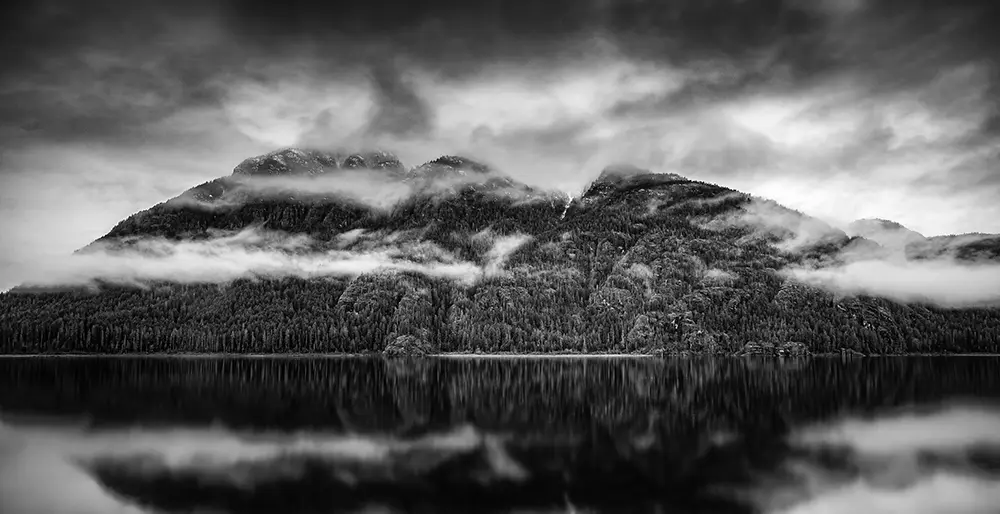
In the early 1900s, landscape photography changed. Influential photographers started using new techniques and visions. This shift transformed our perception of nature’s beauty as photographers captured its splendour through images and portraits.
The f/64 group made a big impact in the 1930s. They focused on sharp images and precise composition, reminiscent of fine art techniques. Their work set new standards for landscape photography. Their approach inspired many photographers to follow suit.
Ansel Adams was a giant in photography. His black-and-white photos of the American West are famous. Adams’ work did more than just create art. It helped protect nature and inspire photographers even today.
Colour photography added a new layer to landscapes. Eliot Porter started this change in the mid-1930s with the Kodachrome film. From 1965 to 1985, colour photography in landscapes grew. Photographers like Ray Atkeson and Philip Hyde showed the American West in bright colors. This opened up new ways to show nature’s beauty.
| Era | Key Features | Notable Photographers |
|---|---|---|
| 1930's | Sharp focus, precise composition | F64 Group members |
| Mid-20th Century | Iconic black and white imagery | Ansel Adams |
| 1965-1985 | Colour landscape photography, vibrant hues. | Ray Atkeson, Philip Hyde |
Landscape photography evolved as it merged with the environmental movement. Photographers used their art to make people think and care about nature. Their photos showed the beauty of Earth and helped carve out important environmental laws.
Photography illustrated the necessity to preserve nature. Photographers showed the beauty of wild places and areas devastated by humans. This helped people see why we must protect nature.
Photographers had to make beautiful photos and share a strong environmental message. They did this by:
They captured photos that moved people to act. It helped keep the conversation about protecting the environment going.
Digital photography has changed how we see and take pictures of landscapes. Now, with better cameras and editing tools, photographers can be more creative than ever, exploring themes in landscape painting.
Digital cameras have changed how we take landscape photos. You can see your shots right away, change settings quickly, and try out different shots. This helps you become a better photographer, capturing stunning images.
With digital technology, new ways to take landscape photos have emerged. High Dynamic Range (HDR) lets you show more light and shadow in the picture. Focus stacking makes everything from the front to the back of the photo clear. These new methods let you show your artistic side in new ways.
Social media has become a place to show off landscape photos. It connects you with others who love photography and allows you to share your work. It also helps turn your love for photography into a business.
Now, digital photography gear is easier to get, making photography more open to everyone. It doesn’t matter if you’re a pro or just starting. The digital revolution has made it easier to enjoy and share your landscape photos with the world.
Landscape photography is always changing, bringing in new ways to see the world, much like landscape painting. Today’s photographers mix art with activism, often inspired by the works of Edward Steichen. They show us the beauty and the need to protect our planet.
Now, landscape photos can be simple or surreal. Some use long exposures for dreamy seas and infrared for strange forests. Urban scenes show how nature meets the city.
Many photographers focus on the environment. They show us melting ice, smaller forests, and rising seas, emphasizing the urgent need for a geological survey of these changing environments. These photos make us think about saving our planet.
Drones have changed how we see the world from above. They let us take amazing shots of mountains, coasts, and cities. This gives us new ways to see and share the beauty of the earth.
| Trends | Description | Impact |
|---|---|---|
| Minimalist Landscapes | Focus on simplicity and negative space. | Creates calming, contemplative images |
| Climate Change | Capturing environmental shifts over time | Raises awareness and promotes action |
| Drone Photography | Aerial views of landscapes | Offers fresh perspectives and compositions |
| Urban Nature Fusion | Blending city elements with landscapes | Highlights the coexistence of urban and natural worlds. |
The history of landscape photography is a journey through time and art. It has grown out of our love for nature. As a photographer, you’re part of a long tradition.
Your work connects people with nature in amazing ways, showcasing naturalistic landscapes. You capture the planet’s beauty, making us care more about the environment. This mix of art and activism changes how we see and protect our world.
The future of landscape photography looks exciting with new tech and ideas. Whether you use a drone or a traditional film camera, your work is crucial. You’re not just taking pictures. You’re making art that tells our planet’s story.
Landscape photography began in the mid-18th century with the invention of the daguerreotype. In the 1920 Pioneers like Ansel Adams captured natural scenes, showcasing the beauty of the environment, which helped shape the genre into a popular art form.
Gustave Le Grey, a French photographer, invented landscape photography in the 1850s. His work, particularly in capturing seascapes, laid the foundation for landscape photography as we know it today..
Landscape photography began with pioneers like William Henry Fox Talbot, inventor of the calotype process, and Carleton Watkins, who documented the American West. These mid-18th century photographers played a key role in shaping the genre
I think steel wool photography creates some of the most amazing images you can capture
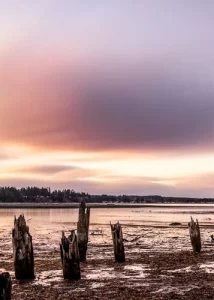
Long exposure photography is a technique that uses slow shutter speeds to capture silky smooth
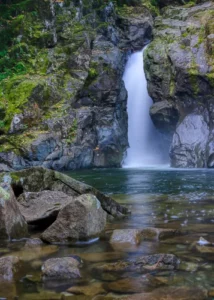
The first time I went to the Medicine Bowls in Courtenay, it felt like a