Grand Opening & Black Friday Sale  =  50% Off 

Len Filters for forest photography
Down Arrow

Lens Filters for Forest Photography: Enhance Your Shots

The forest can be a challenging scene, but filters, in my opinion, are a must-have tool for any outdoor photographer. So how can a len filters help with forest photography? Well, first they can enhance the vibrant greens and control tricky light.

They reduce glare, boost contrast, and even make waterfalls look silky smooth. Whether it’s a polarizer for cutting reflections or a neutral density filter for long exposures, the right lens filter can transform your photos.

Are you prepared to learn which filters are the most effective? Let’s dive in!

Key Takeaways

  • Polarizing filters enhance colour and reduce glare in forest scenes.
  • ND filters enable creative motion blur and exposure control.
  • Graduated ND filters balance exposure between sky and forest.
  • High-quality filters minimize unwanted colour casts and vignetting.
  • Learn how to maintain and look after your filters.

Table of Contents

The Spectrum of Filters Available to Photographers

Filters come in a variety of types and mounts, each with a unique role in enhancing photo quality and unlocking creative techniques. Whether you’re dealing with harsh sunlight or trying to capture the silky smooth flow of a forest waterfall, there’s a filter for every scenario.

They range from polarizing filters that reduce glare and intensify colours to neutral density (ND) filters that help manage light.

Don’t overlook special effects filters. Infrared filters and coloured filters provide even more avenues for creativity, altering your image in-camera for effects that may be difficult or impossible to replicate in post-processing.

 With a well-chosen arsenal of filters, you can elevate their forest photos beyond the typical snapshots to create truly epic, standout scenes.

Must-Have Filters for Forest Photography

Polarizing Filters: Enhancing Colours and Reducing Glare

Polarizing filters are invaluable tools for your lens, especially when you’re deep in the woods, capturing the grandeur of nature. They’re the heroes of colour enhancement and glare reduction

These filters shine in their ability to cut down reflections that often plague surfaces like water or leaves. Wet foliage, in particular, can reflect a ton of light, making the greens look washed out and lacking detail. 

By rotating the filter, you can adjust the level of polarization. This makes polarizing filters indispensable for achieving a beautifully balanced shot with rich colours and clear contrast.

Key Features: 

  • It minimizes the glare on damp leaves and water.
  • It deepens blue skies and makes clouds pop.
  • Enhances the richness of green foliage.
  • Increases image contrast, particularly.
  • Rotatable for an adjustable polarization effect.

Benefits: 

  • Pulls out details obscured by reflection
  • Enables clearer, more detailed photographs
  • It allows for more precise color saturation.
  • Enhances depth perception in photos
  • User-friendly, excellent for varied lighting conditions

Cons: 

  • Wide-angle shots may result in uneven skies.
  • You can reduce the amount of light entering the lens by two stops.

Neutral Density Filters: Mastering Light and Motion

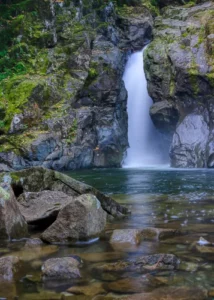
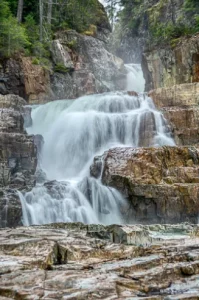
Neutral density (ND) filters are akin to sunglasses for your camera, allowing you to control your shutter speed in bright conditions. They do this by diminishing the quantity of light that enters your lens. These filters are useful when you want to portray motion, like the silky blur of cascading waterfalls or a gentle breeze through the leaves, even under bright daylight.

They come in a range of densities, measured in stops, which correspond to the reduction in the light’s intensity. A 6-stop ND filter, for instance, allows you to keep the shutter open vastly longer than normal, while a 10-stop ND filter can turn a bustling forest scene into a ghostly, serene image by blurring all movement to a smooth haze.

Key Features:

  • Available in various densities.
  • It aids in extending exposure times under bright lighting.
  • Maintains colour neutrality with minimal colour cast.
  • Screw-in and slot-in types of filters offer convenience and versatility.

Benefits:

  • It allows for the motion blur of streams and foliage.
  • Wider apertures in bright light enable the control of depth of field.
  • Increases creative control over exposure settings.
  • This tool is beneficial for a wide range of photographic genres, not just forest photography.

Cons:

  • Long exposure times necessitate the use of a tripod.
  • It can be difficult to view and focus through the viewfinder.

Graduated ND Filters: Balancing Exposure

As you venture into the forest, the contrast between the bright sky and the darker forest floor can be challenging to capture in a single shot. This is where graduated neutral density (GND) filters come into play. They help balance the exposure across a scene by filtering out a portion of the light. 

Soft GND filters work wonders when the transition between light and dark in your scene isn’t a clean line but rather a mix of elements like tree branches against the sky. These filters have a gentle fade from transparent to their full ND effect, ensuring that the line doesn’t become apparent in the final image.

Conversely, when confronted with a more defined horizon, hard graduated ND filters become more effective. The transition is sharper, making them ideal for open areas within the forest or clearings where the sky meets the horizon line. 

Lens filters for forest photography
Click to View Gallery

Managing Vignetting: A Common Filter Side Effect

Photographers frequently encounter vignetting, a subtle shadowing on the corners of images. It has a knack for sneaking in, especially with wide-angle lenses, darkening those edges and potentially detracting from an otherwise stunning photo.

To start with, consider using larger filters or a bigger filter holder when you’re using a wide-angle lens. This additional space can prevent the edges of the filter from encroaching into the photo. 

Stacking filters may compound vignetting issues. The accumulated thickness of stacked filters can intrude into the frame more noticeably, so be mindful of your GND and other filters. While it’s tempting to layer up, try to stick to using just two or three high-quality filters at a time. 

Before you take a shot, check for vignetting in your camera’s live view mode or viewfinder and adjust accordingly. 

Finally, remember that post-processing software can help correct vignetting, but the best practice is always to minimize it during the capture phase.

Dealing with colour casts: restoration of true forest hues

Colour casts can be a source of frustration; they introduce unwanted tints that distort the authentic beauty of forest hues. Typically, this issue arises when you use low-quality filters, which can introduce non-neutral colors into your images. Particularly in a forest setting, the mood of the scene heavily relies on the various shades of green and brown.

To capture the forest’s true colours, invest in high-quality filters. These premium filters normally don’t alter the color balance in the scene.  I say normally, because a 10-stop Lee filter will. Check their website. 

However, if you encounter a filter that results in a colour cast, shooting in RAW gives you the best chance to colour correct. This format allows you to adjust the white balance and colour tint during post-processing, giving you an option to correct the cast.

Familiarize yourself with your photo editing software’s colour correction tools. Applications like Skylum Neo or On1 software offer detailed adjustments that can neutralize colour casts, ensuring your forest photography reflects the true colour of the scene.

Maintaining Your Filters

Cleaning and storage tips for long-lasting use.

To keep your filters in top-notch shape, you need to care for them both in the field and after the shoot. For starters, make it a habit to gently clean your filters after each outing.

Use a soft, dedicated lens cloth or lens brush to wipe away any fingerprints, dust, or water spots from the front of your lens. Even the slightest smudge can affect image quality, so ensure your filters are spotless before heading out.

For storage, choose a filter case or pouch that provides cushioning and separate compartments. This will protect your filters from scratches and breakage, particularly the rigors of a camera bag.  Avoid tossing your filters in loosely, as this can lead to significant damage to the filters.

When you’re out in the field, accessibility to your filters is paramount.

Opt for storage solutions that allow you to quickly identify and swap out filters as needed without fumbling through your gear. You could use colour-coded pouches or clear slots that clearly display the filter type to capture the fleeting light of the forest at the perfect moment.

A dedicated case not only organizes your filters but can also shield them from dust and dirt, which are your nemeses in the wonderful outdoors.

Adopting these simple yet effective cleaning and storage practices will prolong the life of your filters and ensure they’re always ready for your next forest photography adventure..

Adapting to Evolving Conditions Without Danger to Filters

Forest conditions can shift as quickly as the wind. Weather conditions are unpredictable. A sudden rain shower, dramatic changes in light, and the mercurial nature of fog and mist can easily catch you off guard.

When faced with rain or moist conditions, always keep your filters dry and free from water spots; carry a microfiber cloth or lens tissues for quick cleaning.

Some filters have water-repellent coatings, but if yours don’t, being vigilant about wiping them dry will protect the coating and prevent water damage to your filters.

On bright days, you may need to switch quickly between various ND filters. The trick here is to anticipate the changes and prepare your gear ahead of time.

A filter holder system enables quick, spontaneous adjustments without causing damage or contamination to the filters. This setup is perfect if you need to respond swiftly to the sun peeking out from behind the trees.

In cold weather, filters can stiffen and may become difficult to handle with bare hands. To avoid dropping or fumbling, use gloves with a sturdy grip and consider a filter system with easier handling features, like tabs or levers.

Frequently Asked Questions

The best filter for nature photography is a circular polarizer. It reduces glare, enhances colours, and makes skies and foliage more vibrant. This filter is perfect for capturing landscapes, forests, and water scenes with greater clarity and depth.

The best lens filter for shooting outside is a polarizing filter. It reduces glare, enhances colours, and boosts contrast, making it ideal for landscaping.  For long exposures, a neutral density (ND) filter is also useful for controlling light and creating smooth effects in outdoor scenes.

Yes, wildlife photographers use ND filters to control light and achieve creative effects. These filters help manage exposure in bright conditions, create motion blur for artistic shots, or smooth water in natural habitats, adding depth and atmosphere to wildlife photography.

Our Latest Blogs

Download Our Free E-Book

Unlock the secrets to photographing the forest.