Grand Opening & Black Friday Sale  =  50% Off 

micro four thirds for landscape photography
Down Arrow

Exploring Micro Four Thirds for Landscape Photography 

Imagine capturing sweeping vistas and intricate details with a camera that’s as versatile as it is powerful. In the world of landscape photography, the Micro Four Thirds (M4/3) system stands out for its compact size and remarkable photo quality. Whether you’re chasing golden sunsets or exploring rugged terrain, this guide will show you how to harness the power of Micro Four Thirds for landscape photography.

I’ve spent numerous hours using my M4/3, appreciating its compact size and weight. The cameras and lenses are lighter, perfect for those long hikes and getting to remote locations.

Let’s dive in and learn more about this wonderful camera system.

Key Takeaways

  • Micro Four Thirds systems are lightweight and ideal for hiking.
  • Software solutions can mitigate high ISO performance concerns.
  • Unique depth-of-field characteristics benefit landscape photography.
  • Cost-effective compared to full-frame equivalents
  • Olympus PRO lenses offer excellent sharpness at reasonable prices.

Table of Contents

Advantages of a micro 4/3 for landscape photography

Micro-fourths systems are excellent for landscapes. They are light and simple to carry on long hikes. Your outdoor adventures will turn out to be perfect.

One of the best things about the M4/3 is its weather-resistant appeal. I’ve taken amazing shots in mist and light rain without worrying about damage. This feature lets me shoot in bad weather conditions.

The micro-fourths sensor captures rich colours and sharp images. It rivals bigger cameras in quality. I’m amazed at the professional photos I get with the right settings.

  • Compact and lightweight design
  • Weather-resistant bodies and lenses
  • Professional image quality
  • In-body image stabilization

In-body stabilization is a big plus. It allows me to take low-light photos without a tripod. This is ideal for capturing moments during the golden hour.

FeaturesBenifits
Compact size is a major advantageEasy to carry on long hikes
Weather ResistanceShoot in various weather conditions.
Image StabilizationSharper images in low light
Sensor PerformanceA high-quality zoom lens can produce rich colours and crisp details.

Looking to stretch your budget? We’ve got good news! Save an additional 10% use code bwild10

Understanding the M4/3 system

The M4/3 changed the game for landscape photographers. It’s compact but powerful, offering unique benefits for outdoor photography. Learn what makes it special and how to choose the right gear.

Benefits of the micro four thirds for landscape photography

The Micro 4/3 sensor is powerful for its small size and weight. Its 2x crop factor makes it ideal for landscape shots, giving you more reach without heavy gear. My camera and lens combo are much lighter than my full-frame setup. This is a big plus for us old guys on long hikes or travelling.

Pro lenses for this system have amazing quality. I’ve been able to take shots with sharp details from front to back. The wide range of filters lets me create stunning long exposures and dramatic skies, especially when shooting in raw file format.

Choosing the right Micro Four Thirds camera and lens combination

Choosing the right Micro Four Thirds kit for landscape photography is about a few key things. For me, weather-sealing is critical; I need gear that can handle the outdoors. Image stabilization is also key, especially in low light or when using neutral density filters.

For lenses, I want versatility. A wide-angle zoom is a must, but don’t forget about telephotos. They’re useful for making distant elements look closer in your shots. Here’s a quick look at some popular setups for landscape photography:

CameraKey FeaturesRecommended LensBest for
The Olympus OM-D E-M1 Mark IIWeather-sealed, in-body IS12-100mm f/4 is All-around landscape use
Panasonic Lumix G9High-res mode, dual IS, and the right zoom lens can make a significant difference.8-18mm f/2.8-4Wide-angle landscapes
Olympus OM-D E-M5 Mark IIICompact, Weather-sealed40-150mm f/4-5.6Telephoto landscapes

The M4/3 offers a fantastic balance of size and performance, making it an excellent choice for a mirrorless camera.

Key features to look for in landscape lenses

Choosing the right lens for landscape photography is key. I look for lenses that are sharp, weather-sealed, and have a wide range of focal lengths. For Micro 4/3 users, the OM System and Panasonic are excellent.

The importance of aperture settings in landscape photography is paramount.

Aperture is crucial for landscape shots. I use a narrow aperture (f/8 to f/22) to make sure everything in the picture is clear. But wider apertures can make the background blurry, which can look nice.

ApertureDepth of FieldBest Use
f/2.8 - f/4ShallowIsolating subjects, low light
f/5.6 - f/8The settings are ideal for capturing images with outstanding detail using a prime lens.General landscapes
f/11-f/16DeepA good prime lens often achieves maximum sharpness.

Impact of filters on landscape photography results

Filters change the game for landscape photography. I always carry neutral-density and polarizing filters. They help control light and reduce reflections. 

Using a sturdy tripod is key for sharp photos, especially with filters or in low light. It allows me to take clear images and attempt longer exposures. 

Exploring Olympus micro four third lenses

Olympus lenses are excellent for landscape photos. They have amazing image quality and are very versatile. This makes them one of my top picks.

Review of Olympus Pro lenses for landscape photography

The M.ZUIKO Digital ED 40-150mm F2.8 IS PRO is a versatile zoom lens. For me, it is a standout lens. It has an equivalent zoom range of 80-300mm, perfect for many landscapes. 

For wide shots, I use the M.ZUIKO Digital ED 7–14mm F2.8 PRO. It’s ideal for big scenes with little distortion. Its wide aperture is perfect for shooting in low light.

The 8–25mm F4.0 PRO lens is versatile for wide-angle and standard shots, making it ideal as one lens for many situations. It’s ideal for different landscapes where I need flexibility without losing quality.

Understanding image stabilization with Olympus

Olympus’ in-lens stabilization is a big deal for landscape photos. It works with the camera’s stabilization for sharp shots taken by hand, even in harsh light. This has been helpful many times when I couldn’t use a tripod.

Lens ModelFocal LenghtMax ApertureStablizationWeather-Sealed
F2.8 PRO (40-150mm)80-300mm (equiv.)F/2.8YesYes
7-14mm F2.8 PRO14-28mm (equiv.)F/2.8NoYes
8-25mm F4.0 PRO16-50mm (equiv.)F/4.0NoYes

Built tough and weather-sealed, Olympus PRO lenses are ideal for outdoor use. They’re also smaller than full-frame lenses, making them ideal for once again hiking or travelling.

Utilizing Panasonic lenses for micro four-thirds 

Panasonic lenses for micro four thirds are versatile and high-quality.

How to Achieve Sharpness in Landscape Images with Panasonic Lenses

Sharpness is key in landscape photos, and Panasonic lenses do exceptionally well in this area. Using a strong tripod and the right aperture (usually f/8 to f/11) helps. Panasonic’s Leica lenses are top-notch, with amazing clarity.

Lens FeatureImpact on Landscape Photography
Wide ApertureIt allows for low-light shooting and creative depth of field.
Image StabilizationIt reduces camera shake, allowing for sharper handheld shots.
Weather SealingIt protects lenses from a wide range of outdoor conditions.
High-quality GlassImproves overall image quality and dynamic range

With these features, we can capture stunning landscapes.

Enhancing landscape photography with accessories

The right accessories can really change your landscape photos with M4/3 systems. These cameras and lenses are excellent for outdoor shots. But a few key add-ons can make your photos even better.

Importance of Tripods in Maintaining Stability for Landscape Shots

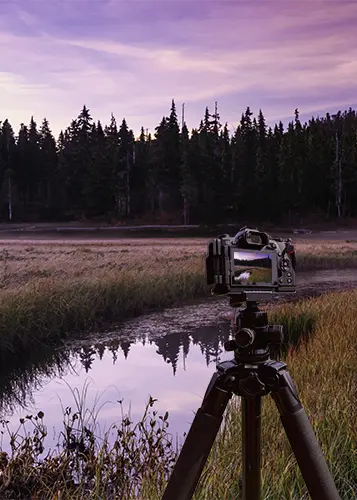
A strong tripod is key for landscape photography. I prefer lightweight carbon fibre tripods. They’re simple to carry and set up, making them perfect for long hikes to wonderful spots.

These tripods keep my camera steady during long shots, even in low light. This ensures my photos are sharp and clear.

Exploring the Use of Filters for Artistic Effects in Landscape Photography

Filters can really change your landscape photos. To create smooth water effects or capture cloud movement, I use neutral-density filters. Graduated filters balance bright skies with darker ground.

For manual focus lenses, a circular polarizer boosts colours and reduces glare on water or leaves.

Remember to protect your gear! A weather-resistant bag is key for keeping your cameras and lenses safe outdoors. With these accessories, you’re ready to capture amazing landscapes wherever you go.

Conclusion

Is the Micro Four Thirds for landscape photography the right choice for you? Absolutely! Its compact size and amazing image quality make it a fantastic option for capturing stunning landscapes. While it might not have the same low-light performance as a full-frame camera, the benefits in portability and cost-effectiveness are difficult to beat.

If a Micro Four Thirds system inspires you to explore more, then it’s the perfect camera for your adventures. So, pack your gear, find your perfect spot, and start capturing the beauty of the world around you. Happy shooting!

Frequently Asked Questions

Is the Micro Four Thirds still worthwhile? Absolutely! Smaller, lighter, and often cheaper than full-frame, M4/3 cameras deliver impressive image quality and are perfect for travel, vlogging, and everyday shooting.

Why not Micro Four Thirds? A smaller sensor means less light, but advanced technology and excellent lenses often compensate. Perfect for travel and hiking!

Can Micro Four Thirds be used professionally? Absolutely! Micro Four Thirds cameras offer outstanding image quality, portability, and affordability, making them a viable choice for many professional photographers.

Our Latest Blogs