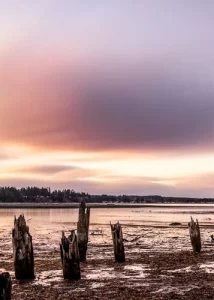
Long Exposure Photography: Control Motion in Your Photos
Long exposure photography is a technique that uses slow shutter speeds to capture silky smooth
Share the Love This Valentine’s Day – 25% Off




It’s raining again here on Vancouver Island. So, honestly, what’s new? Have you ever stared out your car window, pondering if the weather has ruined your plans for photography? Despite the gloom, adverse weather can unveil dramatic scenes that fair skies can’t match.
In this article, I’ll guide you through shooting landscapes in bad weather and turn those grey clouds into breathtaking images. Read on; your rainy-day adventure awaits!
When the sky darkens and the winds howl, don’t pack away your camera; these moments are ripe with potential for a landscape photographer. Embrace the brewing storm or swirling fog; it’s in these conditions that you can capture landscapes steeped in drama and emotion, telling a story that clear skies simply cannot.
Bad weather brings drama. Imagine thick fog, heavy rain, or a snowstorm; all these add moods that sunny days can’t. You capture the atmosphere and tell stories of nature’s raw moments.
Dark clouds gather over a mountain; you feel their power as you click the button.
Dull skies stimulate your compositional creativity, a reminder that landscape photos often emphasize making the most of an overcast day. Shapes and textures are your tools for stunning photos without bright sunlight. Trees bent by wind and paths slick with rain pull viewers into the scene.
Work with what you have, finding beauty in the gloomy things others miss.
Harness the drama that adverse weather brings to your photography. Gloomy days, howling winds, and cascading rain adds a layer of emotion to your images. As a landscape photographer, use these elements to inject a strong mood into your work.
Consider the narrative you wish to convey with your scene, whether it’s a tale of resiliency in the face of an impending storm or a tale of tranquility amidst a gentle snowfall.
Focus closely on composition; this is what makes viewers feel like they’re part of the scene. To draw attention to the image, use leading lines created by roads or branches. Look for contrasts between light and shadows that highlight textures and shapes made vivid by wet conditions.
Remember, capturing mood involves more than just what you see; it also involves evoking feelings in those who view your photograph.

Finding a favourable light in the midst of difficult weather may seem like a daunting task, but it’s often when the most dramatic and evocative lighting conditions reveal themselves.
Keep your eyes peeled; those fleeting moments when nature’s moodiness breaks can transform a scene into something truly extraordinary, offering unique photo opportunities.
Look for the subtleties that adverse weather brings. Notice how rain adds shine to leaves and rocks. Capture the patterns of snow or the way fog weaves through trees. These elements can turn a wonderful photo into an amazing one.
Good light is more than just sunrise; it’s about finding the right balance, possibly adjusting the white balance to capture the mood of an overcast day. Even in overcast conditions, you’ll find soft, diffused light making the colours pop and reduces harsh shadows. Keep your eyes open for those brief moments when nature surprises you with perfect lighting.
Don’t let grey skies fool you; even on dreary days, the right light for a beautiful shot can appear. Keep your eyes peeled for moments when the sun peeks through clouds or fog adds mystery.
Soft, diffused lights can bring out rich textures and subtle hues that harsh sunlight overpowers.
Bad weather often means dramatic lighting conditions. Think of thunderstorms backlit by flashes of lightning or rainbows appearing amidst dark showers.
Use a tripod to keep it steady during long exposures that demand precision and patience. This way, even when the weather seems uncooperative, you can unveil stunning landscapes hidden within the storm.

Download your free trial today!
When you’re out there, with the wind howling and the sky an ominous grey, your camera’s shutter speed becomes a powerful tool. Paint with time to reveal the unseen rhythm of severe weather.
Might a slow sweep capture those streaking raindrops, or can a quick click freeze the fog in its eerie stillness? Let’s find out together.
Playing with your shutter speeds opens up a world of moods in your landscape shots. Slow down the shutter, and you create a dreamy scene where water turns silky and clouds stretch across the sky.
This ethereal effect can make even the gloomiest weather feel magical.
Now pick up the pace with faster shutter speeds to capture snapshots of time, rain frozen in mid-air, or leaves held still in a gust of wind. It’s all about motion and energy, making viewers feel like they’re right there in the moment.
For longer exposures, always use a tripod to keep your camera steady and avoid that dreaded camera shake.
Pro-Tip
Shifting from experimenting with shutter speeds to securing your camera on a tripod is key to nailing those long exposures. 3 or 4 second exposures can cause shaky hands, whereas a tripod can stand still through it all.
A tripos will keep your camera steady while you photograph the movements of the clouds or a silky-smooth waterfall. Even in gusty winds, a sturdy tripod ensures tack sharp images and lets you play with exposure times without worry.
Remember to check your tripod’s stability before clicking. Plant it firmly on the ground and adjust the legs so they’re even. Use a remote or timer to avoid jostling the camera during that crucial moment when you press the shutter button.
With these steps, long exposures can easily transform adverse weather into breathtaking scenery.
While stormy skies may seem like your biggest challenge, it’s actually the composition that can make or break your shot. With vibrant sunsets off the table, you’ve got to get creative. Find those leading lines, play with symmetry, and let the raw drama of nature take centre stage in your frame.
Bad weather brings clouds, fog, and rain that can hide your scene. But don’t let this stop you! Instead, focus on creating a strong composition to tell a story. Think about leading lines from rivers or paths that pull the viewer’s eye through the picture.
Use trees or rocks as natural frames for your landscape shots.
Without stunning sunset colours, your frame and placement will draw attention. Play with foreground interest, maybe a leaf-laden branch or textured rock. Emphasize the significance of robust forms in landscape photography, particularly on a cloudy day.
These elements add depth when the skies are grey and the light is flat. Take inspiration from nature to create compositions with structure, not just color.
With no dramatic sunlight, you must get creative with your composition. Think about how you can use lines, shapes, and textures to lead the viewer’s eyes through your photo. Use a wide-angle lens to capture vast scenes or zoom in for detailed shots that highlight the beauty of adverse weather.
Look for contrast in the foggy atmosphere or reflections in rainy puddles, as these elements can be very useful during an overcast day. Composition is your tool to tell a powerful story even when the skies are grey.
Within your frame, carefully place elements. You might find intriguing patterns on a wet beach or stark branches against an overcast sky. A neutral-density filter can be critical for landscape photography tips, especially when managing the tricky light of an overcast day or enhancing the effect of wet weather. It can aid in controlling exposure and enhancing the depth of field.
Work with what nature provides; sometimes less light reveals more details that are not visible on sunny days.

In the midst of adverse weather, safeguarding your camera equipment isn’t just a precaution—it’s absolutely vital for capturing those high-quality images you’re after. From rain covers to moisture-absorbing silica packs, there are smart ways to keep your gear dry and functioning, ensuring that when the perfect shot presents itself, you—and your camera—are ready to seize it.
Protecting your camera gear is key to getting top-notch photos. Use a good waterproof bag and rain cover to shield your equipment from severe weather. Weather-sealed bodies and lenses also offer some defence against wind, rain, and dust.
After a day of shooting in adverse weather, clean your gear. This keeps your camera and gear in tip-top shape and ensures you get the most out of your equipment.
When the skies turn grey and the winds pick up, it’s your cue to get closer, to seek out those intricate details, and to carefully select a location that transforms adverse weather from foe to ally in your landscape photography.
Bad weather doesn’t mean bad photos. Zoom in on tinier things, like leaves or frost patterns. Even when the sky is grey, these small wonders shine brightly in your camera’s eye. They bring out the place’s character and tell an entirely different story.
Long lenses can be particularly useful for landscape photography, helping to capture details that shine through even when the weather is bad. You can capture these details without getting too close.
Focus on how raindrops hang from branches or snowflakes stack on surfaces. Use your aperture to control the depth of field and highlight your subject against a soft background. This approach can reveal the enduring beauty of nature despite tough conditions.
Picking the right spot is key for outstanding photos, even when the weather isn’t perfect. You want a place that shows off nature’s drama when clouds roll in or rain starts to fall. Look for scenes with strong shapes, like jagged cliffs or winding rivers.
Select features that stand out and can look amazing against stormy skies.
Keep an eye out for places that tell a story about the weather. A lone tree bending in the wind can capture how wild it feels outside.
Little things add a dimension to your work and make viewers feel like they’re there with you, facing the elements.

Looking to stretch your budget? We’ve got good news! Save an additional 10% use code bwild10
In the dance with nature’s unpredictability, your persistence in shooting landscapes under stormy skies or howling winds promises imagery as compelling and dramatic as any sun-drenched horizon—discover the beauty that awaits beyond fair weather photography.
Bad weather doesn’t mean inadequate photos. Rain, wind, and clouds add a special mood to your shots that sunny days can’t match, emphasizing how taking photos on an overcast day can add a unique atmosphere. Dark skies and stormy moments often tell a stronger story.
Grab your camera and capture the drama as it unfolds in the sky. When shooting in wet weather, use filters to control the light or make colours pop against gloomy backgrounds.
Choosing where to shoot is key. Look for scenes that gain character from the weather; crashing waves during a storm or mist hanging over a mountain can be breathtaking. Adjust your shutter speeds for creative effects: quick to freeze raindrops, slow to smooth out water motion.
Think about composition; with less light, shapes and lines matter even more. Embrace these elements, and those cloudy days might just become your favourite times to shoot.

Absolutely! Photojournalists capture stunning shots even with precipitation. The trick lies in being in the right spot and embracing the dramatic mood that adverse weather brings to landscapes.
A full-frame camera with its larger sensor can gather more light, helping you get better details in low-light conditions. But any camera will work for shooting landscapes in bad weather.
Indeed, it does. Focal length is quite important! Wide-angle lenses work wonders for capturing expansive landscapes and the dynamic skies that often accompany adverse weather scenes. Whereas a telephoto lens will allow you to zoom into the details of the scene.
Get creative; use protective gear like rain covers or even simple plastic bags to shield your camera from the elements. It’s all about improvising; keep your gear dry so you can focus on capturing those moody shots without worry.
Long exposure photography is a technique that uses slow shutter speeds to capture silky smooth
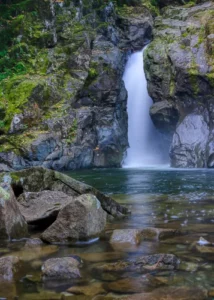
The first time I went to the Medicine Bowls in Courtenay, it felt like a
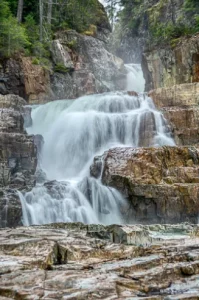
Lower Myra Falls is one of those places in Strathcona Park that feels far more