Grand Opening & Black Friday Sale  =  50% Off 

Lenses for forest photography
Down Arrow

Best Lenses for Forest Photography: Top Picks for Beginners

Forests can cast an allure over anyone, but for a photographer, they’re a canvas in waiting. The play of light through the leaves, the mosaic of colours, and the intricate natural patterns create a rich tapestry that is both challenging and rewarding.  Photographing the forest is about conveying the spirit, wind whispers, and old trees’ stories, not just preserving a scene.

Key takeaways

  • Pick the best lens: Choose lenses that suit wide, detailed, or isolated forest shots.
  • Aperture matters: Wide apertures excel in low light; narrow ones offer greater focus depth.
  • Lens features: Prioritize stabilization, weather sealing, and coatings for forest shooting.
  • Focal length: What is the best focal length and why it matters.
  • Accessories: Filters, tripods, and remotes enhance stability and sharpness.

Table of Contents

Why the right lens matters in forest photography

Choosing the perfect lens for forest photography isn’t just a technical decision; it’s the key to unlocking your artistic expression. By enhancing the depth, detail, and scale of the forest, the right lens reveals textures and layers that would otherwise go unnoticed. Whether it’s capturing the grandeur of wide landscapes or the intricate details of bark and leaves. The lens you pick is your paint brush. You can literally transform the mundane into the magnificent by virtue of the composition, focus, and depth that you choose.

Unveiling top lenses for forest photography

The ultra-wide-angle lens

If you yearn to encapsulate the boundless beauty of forest expanses in a single frame, then an ultra-wide angle lens is your trusty companion. These lenses’ extensive field of view guarantees that you capture every aspect of your magnificent surroundings. 

Top features:

  • The ultra-wide-angle zoom has a focal range of 16-35mm.
  • Maintain a constant f/2.8 aperture to deliver exceptional low-light performance.
  • The robust build quality prepares it for harsh outdoor conditions.
  • Edge-to-edge sharpness for high-resolution images.

Pros: 

  • You can capture vast forest scenes with an expansive field of view.
  • Even in dim forests at dawn or dusk, it maintains image quality.
  • Durable design withstands the elements, providing reliability.
  • Enhanced contrast and colour rendering.

Cons

  • The weight might be a burden on longer treks.
  • The price tag is a significant investment.

Mid-size zoom lens for versatile framing in the woods

Photographers seeking versatility and a lens capable of handling unforeseen framing opportunities should consider this lens. Whether you’re framing a towering tree canopy or a delicate fern on the forest floor, a mid-size zoom lens excels due to its incredibly flexible focal length and superb image quality.

Top features:

  • The versatile 24-70mm range covers wide-to-short telephoto perspectives.
  • A constant f/2.8 maximum aperture for consistent performance.
  • Weather-seal construction to protect it from dust and moisture.

Pros:

  • It enables the capturing of both expansive scenes and in-depth details without the need to switch lenses.
  • It excels in the dim lighting in dense forests.
  • The system provides high-quality, professional-grade images.
  • Auto-focus is quick and reliable, capturing fleeting moments with precision.
  • This sturdy build prepares it for the unpredictable nature of outdoor elements.

Cons:

  • This product is on the heavier side.
  • High-end price points may not be accessible for all budgets.

Seasoned adventurers looking for one lens that can do it all in the forest, from capturing sunbeams piercing through fog to the nuanced texture of the woodland floor,the mid range zoom makes for an excellent investment for serious photographers.

Prime lens for sharp, detailed textures

When crisp, pinpoint clarity on the rugged bark or delicate moss of a tree is what you’re after, a lens like a 24mm or 50mm prime is the go-to choice. This type of lens thrives on its ability to render fine details with precision, which is paramount in forest photography, where every detail contributes to the overall mood of the image.

Top features:

  • The f/1.8 aperture provides enhanced control over the depth of field.
  • High resolution and optimal peripheral brightness
  • To minimize chromatic aberration, they use special low-dispersion (SLD) glass.
  • Specifically engineered for high-megapixel DSLRs, it excels in capturing intricate details.

Benefits:

  • The lens has the ability to produce a dreamy background blur, which enhances the visibility of your subject.
  • Even at maximum aperture, it generates tack-sharp images.
  • Corrects colour fringing, enhancing the crispness of textures.
  • Swift and stealthy auto-focus won’t scare away woodland creatures.
  • It guarantees the clear capture of even the smallest details.

Cons:

  • Fixed focal length reduces framing flexibility.
  • Zooming is done with your feet. 

Photographers who savour the art of detail and have the patience to compose meticulously may want to use a prime lens.

Best telephoto lens for isolating subjects amongst the foliage

When your vision extends to isolating a lone branch among the trees or capturing the intimate dance of leaves from afar, a telephoto lens becomes your ally. It allows you to zoom into the natural world without disturbing it, while image stabilization ensures clarity in your shots, even when handheld. The compression effect of this lens makes subjects stand out starkly against softened forest backgrounds, offering a new dimension to your photographic journey.

Top features:

  • The telephoto zoom range 70-200mm allows you to get close to distant subjects.
  • An optical image stabilizer can provide up to 3.5 stops to prevent shake.

Benefits:

  • It brings distant subjects into sharp focus without interfering with the scene.
  • Image stabilization facilitates shooting at lower shutter speeds.
  • Maintains image integrity by minimizing distortions
  • The product resists dust and moisture, making it ready for the rigours of outdoor photography.

Cons:

  • The item is bulky and could be difficult to carry during extended treks.
  • The price of the premium lens reflects its professional features.

Enthusiasts and professionals geared toward wildlife or distant subjects in forest environments who value image stabilization and exceptional optical quality and are willing to invest in a lens that can deliver breathtaking isolation and compression effects.

Special attributes to consider for forest photos

Light-gathering ability and aperture importance

The aperture of your lens governs how much light enters your camera, and in the dimly lit corners of a forest, this can be the difference between a decent shot and a fantastic one. A lens with a wide maximum aperture, often referred to as a ‘fast’ lens, allows for faster shutter speeds, reducing motion blur. A narrower aperture, on the other hand, keeps more of the scene in focus, allowing for those deep depth-of-field shots that have everything from the nearest leaf to the furthest tree in sharp detail. 

Stabilization and handling shutter speeds among the trees

Without a tripod, navigating the often-steady breeze and the dappled light among the trees requires a lens with image stabilization. This technological marvel enables you to capture sharp images at slower shutter speeds, effectively preventing blur from hand shake or subject movement. What does this mean? You can shoot at shutter speeds up to three stops slower than otherwise possible, preserving the serene vibe of the forest without compromise.

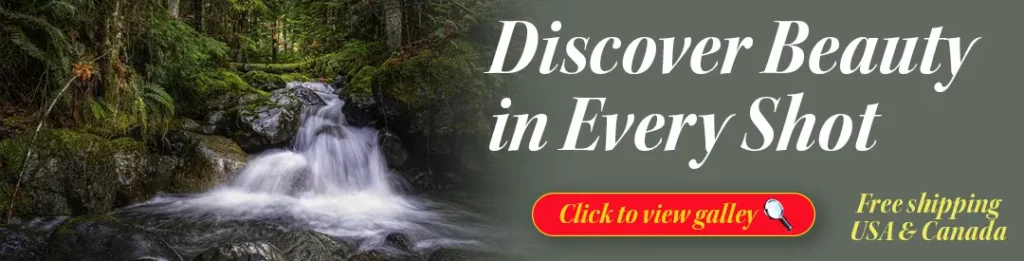
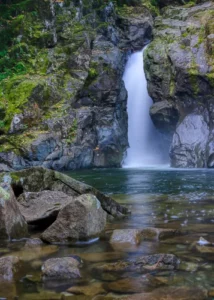
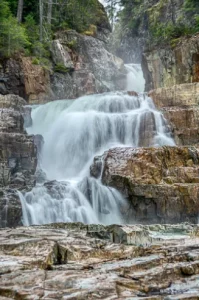
Example of what you can photograph when you understand the best lenses for forest photography
Click to view the full gallery

Making your choice: Investment vs. value

Balancing cost and quality for your next forest adventure

Navigating the delicate line between expense and excellence can seem daunting, but it doesn’t need to be. Assess your photography goals and budget before making a purchase. Mid-range lenses, such as the Sigma Art, typically strike a balance between affordability and high performance.

While they may not boast the prestige of top-tier lenses, a 50mm lens can deliver quality that can satisfy even discerning photographers on forest adventures. Always weigh the lens’s features against your specific needs; sometimes, a lower-cost lens can surprise you with its capabilities.

When to splurge and when to save on forest photography equipment

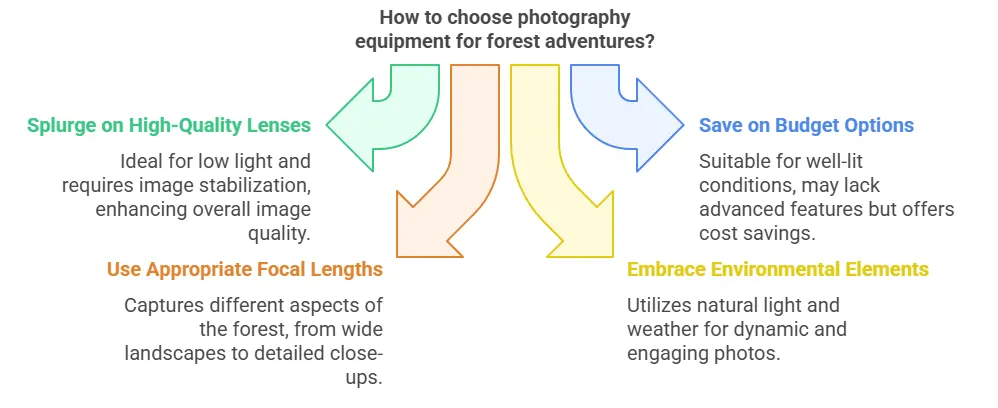
Deciding when to splurge or save on forest photography equipment is a matter of prioritizing your needs. Splurge on lenses with wider apertures and image stabilization if you frequently shoot in low light or require crisp shots without a tripod, especially when using a wide-angle lens.

However, saving on alternatives like older lens models or those without vibration reduction can be smart if you usually shoot in well-lit conditions or don’t mind carrying a tripod. Remember, investing in high-quality glass is beneficial for overall image quality, but be sure it aligns with your shooting style and the conditions you typically encounter in the forest. 

Creative tips for using these lenses in the field

Mastering composition with the right focal lengths

Mastering composition in forest photography is like learning the subtle language of the woods, and the right focal length is your vocabulary. Wide-angle lenses are your go-to for capturing the breadth of the forest, telling a story of scale and immersion. Standard focal lengths (around 50mm) provide a more natural perspective, allowing you to view the scene through your own eyes, making them ideal for portraying the forest in a relatable manner with a sharper focus.

Telephoto lenses allow you to isolate subjects, creating portraits of trees, animals, or even intriguing patterns within the foliage, cutting out the clutter and focusing on the beauty of individual elements. Experimenting with these different focal lengths lets you articulate the full narrative of the forest, from grand epics to intimate sonnets.

Embracing environmental elements to enhance photos

Harnessing the forest’s environmental elements, like the soft diffusion of light on a misty morning or the vibrant hues of a sunset, can elevate your photos from snapshots to masterpieces. Embrace the unpredictable weather; overcast days can provide soft, even lighting, while post-rain freshness intensifies the greens and earthy browns. Incorporate natural patterns and leading lines, such as a river or a fallen log, to give your images depth and direct the viewer’s eye through the scene.

Using the environment’s dynamic conditions can turn an ordinary forest photo into a stunning, emotive piece that truly resonates with the beholder.

A diagram showing how to choose a lens for forest photography.

Accessorize your lenses for peak performance.

Filters that bring out the best in your forest images

To truly make your forest images stand out, integrating filters into your lens setup can be transformative. For instance, polarizing filters remove the glare from wet leaves and intensify their natural colours, giving your images a vibrant punch that’s hard to achieve after processing. 

Neutral density filters are useful for achieving smooth waterfall or stream shots, enabling longer exposures without overexposure, especially when paired with the right type of lens. Even a simple UV filter can protect your precious lens from the elements, making it a wise addition. 

Additional gear for elevated landscape photography

A sturdy tripod is indispensable, especially for achieving sharp focus in low light or when using slow shutter speeds for creamy water effects. A remote shutter release minimizes camera shake and is perfect for long exposure shots.

Lens hoods help in preventing lens flare from unpredictable forest lighting, and a set of spare batteries and memory cards ensures you don’t miss a shot with your best lens.

Final thoughts on lenses for forest photography 

In forest photography, your lens is more than just gear; it’s a creative tool for capturing the magic of nature. Whether you’re focusing on intricate details or isolating a subject among the trees, choosing the right lens can significantly enhance your photography experience. Remember to consider features like aperture, stabilization, and durability to match the unique challenges of shooting in forests.

Don’t forget the value of filters and accessories—they can take your photos from excellent to unforgettable. With the right equipment and a little experimentation, you’ll be ready to tell the forest’s story through your lens.

Frequently Asked Questions

To capture grand forest landscapes, a wide-angle lens is typically best suited, ranging from 16mm to 35mm. This focal length enables the capture of expansive scenes in a single image, offering context and the essential sense of space in landscape photography.

Absolutely, prime lenses with their fixed focal lengths can be highly effective for forest photography, offering superior sharpness and a wider maximum aperture. They encourage creative composition by physically moving around to frame your shot.

Image stabilization is very beneficial for shooting in the woods, especially in low light or when using slower shutter speeds; it helps to prevent camera shake and achieve clear images without a tripod.

Our Latest Blogs

Download Our Free E-Book

Unlock the secrets to photographing the forest.