Grand Opening & Black Friday Sale  =  50% Off 

Key camera settings for capturing stunning forest photography.
Down Arrow

The Essential Guide to Camera Settings for Forest Photography

Capturing the forest through your lens can be difficult, but it’s an art that every photographer should try. However, you’ll need to finesse your camera settings. I’ve spent hours in the woods, tweaking my gear for the perfect shot.

However, there is no universal approach to forest photography, and it is crucial to experiment with various photography tips. Each season, time of day, and woodland scene needs a different approach. It’s about adapting and experimenting to find the right mix of tech and creativity.

Key Takeaways

  • Aperture priority mode offers control over depth of field.
  • Shutter speed adjustments capture motion or stillness.
  • ISO settings are crucial for low-light forest scenes.
  • Early morning or evening light yields the best results.
  • Experiment with settings to match creative vision.

Table of Contents

Understanding the significance of camera settings

Your settings are key in forest photography. They help you capture the beauty of woodland scenes. This includes everything from tall trees to small mushrooms. Let’s explore why these settings are important and how they affect your photos.

Why camera settings matter in forest photography

Forest photography comes with its own set of challenges. The right settings can make your photos stand out. Depth of field ensures everything is sharp, from close-up leaves to far-off trees. Exposure compensation helps balance light and dark areas. And using a tripod is crucial for tack-sharp focus in dim light.

Here’s a quick rundown of key settings:

  • Aperture: Controls depth of field
  • Shutter speed: Affects motion blur
  • ISO: Adjusts light sensitivity

The Impact of Lighting Conditions

Forests are full of light and shadow. Sunlight filtering through leaves creates magical scenes. But this beauty can be tricky to capture.

To tackle these lighting issues:

  • Use exposure compensation to balance highlights and shadows.
  • Shoot during Golden Hour for warm, soft light.
  • Embrace overcast days for even lighting.

In low light, a sturdy tripod is an invaluable tool. It lets you use slower shutter speeds without losing sharpness. 

Looking to stretch your budget? We’ve got good news! Save an additional 10% use code bwild10

Recommended camera settings for forest photography

Forest photography needs careful camera settings. Choosing the correct ISO, aperture, and shutter can significantly impact the quality of the photo. Let’s explore the key settings along with some tips for capturing the woods’ magic.

ISO settings for various lighting scenarios

In forests, light can be tricky. Start with a low ISO of 100-400 to avoid noise. During golden hour, about an hour after sunrise or before sunset, increase your ISO slightly. This captures the enchanting glow that filters through the trees, enhancing the depth of your photos.

For blue-hour shots 30 minutes after sunset, you might need to push your ISO higher. This balances the contrasting forest greens and sky blues, enhancing your focal point in the image.

Optimal aperture for depth of field

Aperture choice shapes your forest scenes. For sweeping landscapes, aim for f/8 to f/11. This range ensures sharpness across your landscape photo frame.

Want to highlight a specific tree or mushroom? Use a shallow depth of field, like f/2.8, with a telephoto lens for a dreamy, blurred background effect. Lens selection is key here too. Wide-angle lenses (16-35mm) are excellent for vast scenes in landscape photography, while a 24-70mm offers versatility for various composition techniques.

Shutter Speed Considerations

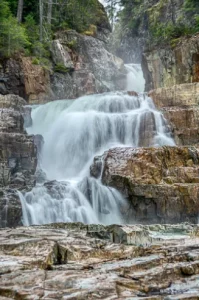
The shutter speed significantly influences the quality of your shots. On breezy days, faster speeds freeze leaf movement. For misty mornings or to capture the flow of a forest stream, slow it down. For these long exposures, a tripod is an indispensable tool. Here’s a handy guide:

SceneShutter SpeedEffect
Windy forest photography1/250s or fasterSharp leaves and crisp details enhance the landscape image.
1/4 - 1sSilky water effect
Night forest15-30sStar trails and moonlit scenes

Remember, these settings are starting points. The beauty of forest photography lies in experimenting with different composition techniques and adjusting your settings to match the mood you're after.

Adapting settings for different seasons

Different seasons can bring about significant changes to your woodland photos. Your settings must change too.

Spring captures: Vibrant colors and light

Spring brings new life to the forest. Use a polarizing filter to make colors pop and reduce glare. Adjust your exposure to +0.3 or +0.7 to brighten shadows without losing detail.

Summer adventures: Managing brightness

Summer sun can be harsh in forests. Use exposure compensation from -0.3 to -0.7 to avoid overexposure. Shoot in early mornings or late afternoons for softer light. Find dappled light spots for intriguing patterns.

Autumn foliage: Emphasizing warm tones

Fall is a dream for us forest photographers. Your polarizing filter will enhance reds and oranges, making your photos vibrant. Bracket your exposures to get all the details of bright leaves and dark shadows.

SeasonKey SettingsRecommended Adjustments
SpringPolarizing FilterOn
SummerExposure Compensation-0.3 to 0.7
AutumnWhite balancewarm

These are just starting points for landscape photographers. The magic of forest photography lies in experimenting with different photography tips. Find what works best for each season’s light and colors. Don’t be afraid to try new things!

camera settings for forest photography

Post-processing tips for forest photography

After taking amazing forest photos, it’s time to make them even better. Post-processing in your favorite software is key to enhancing woodland images and achieving professional photographer quality. Let’s explore some important techniques to improve your forest shots.

Enhancing depth and detail

Always shoot in RAW format to keep more image data for better post-processing. This makes editing easier. Use software to adjust shadows and highlights, revealing hidden details.

Careful dodging and burning to help guide the viewer’s eye. This creates a sense of depth and dimension.

Balancing exposure and contrast

Lighting forest scenes can be challenging. In your editing software, tweak exposure to show details in shadows and highlights. Adjust contrast to make elements stand out, adding depth.

Use selective adjustments to improve specific areas without changing the whole image.

Adjusting colors for natural effects

In forest photography, aim for natural colors to enhance your photo. Be careful with saturation, especially for greens and browns in your images. Use color balance tools to get a realistic forest atmosphere and enhance your photo.

Remember, small changes can make a big difference.

Post-processing is where the magic happens. It's your chance to bring out the true essence of the forest you experienced.

Mastering these techniques can turn your raw captures into stunning forest images. Don’t be afraid to try different settings in your software.

Common Mistakes to Avoid in Forest Photography

I’ve seen many photographers stumble in the woods, but not just over roots and rocks! Let’s talk about some common mistakes in forest photography. These mistakes can trip up even the most seasoned shooters. I’ve made these mistakes myself, and I’m here to help you avoid them.

Overexposing bright areas

Forest photography can be tricky, especially with sunbeams peeking through the canopy. These sunbeams can be magical, but they can also cause exposure nightmares. Spot metering plays a crucial role in this situation. It helps you keep those bright spots in check without making the rest of your scene murky.

Remember, it’s easier to bring up shadows in post-processing than to recover blown-out highlights.

Ignoring focus depth

Forests are full of depth, and capturing that sense of space is crucial. I used to struggle with this until I discovered focus stacking. It’s a game-changer for scenes where you want both the delicate fern and the majestic redwood to be sharp.

Don’t be afraid to experiment with different apertures and focusing techniques. This will bring your forest to life.

Neglecting composition techniques

In the chaos of a forest, it’s simple to forget about composition. But trust me, the rule of thirds is just as important here as in any other genre. I always take a moment to look for natural frames or leading lines formed by tree trunks or winding paths.

These elements can transform a cluttered forest scene into a compelling visual story. And remember, sometimes less is more. Don’t try to cram every intriguing tree into one frame—let your composition breathe!

Conclusion

Forest photography is an exciting challenge that pushes you to think creatively and adapt to changing conditions. From perfecting your camera settings to navigating tricky lighting and seasonal shifts, the forest offers endless opportunities to grow as a photographer.

The key is to experiment. Try different apertures, shutter speeds, and ISO settings to see how they affect your images. Work with the light—whether it’s golden hour, overcast skies, or dappled sun—and embrace tools like tripods and polarizing filters to enhance your shots. Most importantly, take your time. Discover hidden details and magical moments in forests.

Don’t let the clutter get you down! With patience and practice, you’ll capture stunning woodland scenes that showcase the beauty and complexity of nature. So, grab your gear, head into the woods, and start shooting. Every frame is a step closer to mastering the art of forest photography.

Frequently Asked Questions

The best focal length for forest photography depends on your subject. Wide-angle lenses (16-35mm) are ideal for capturing vast landscapes, while mid-range lenses (24-70mm) offer versatility. For isolating details like mushrooms or tree trunks, use a telephoto lens (70-200mm) for a stunning close-up effect.

The best settings for nature photography include using aperture priority mode (f/8-f/11) for landscapes, a low ISO (100-400) to minimize noise, and adjusting shutter speed based on movement. These settings balance depth, sharpness, and light, making them ideal for capturing nature’s beauty.

Our Latest Blogs

Download Our Free E-Book

Unlock the secrets to photographing the forest.