Colour Theory for Photographers: A Practical Guide
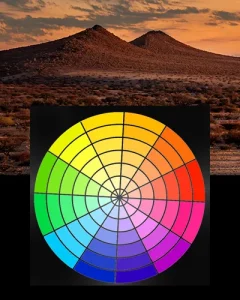
Colour theory for photographers is something I never thought about when I first started out.

Share the Love This Valentine’s Day – 25% Off
Did you know 94% of first impressions are design-related? In photography, dynamic balance is key to turning a decent shot into a masterpiece.
You as the photographer need to understand that balance isn’t just about symmetry. It involves creating harmony within your frame to guide the viewer’s eye. Whether you’re shooting landscapes, portraits, or street scenes, understanding dynamic balance in your composition can take your work to new heights.
Are you prepared to unleash the potential of balance in your photographs? Let’s explore the world of visual equilibrium. Discover how to create images that captivate and inspire.
Prefer Listening? Click To Tune Into the Audio Version Here!
Dynamic balance in photography makes images that grab the viewers attention. By learning about visual weight and composition, you can improve your photos. Let’s look at what makes photos appealing and balanced.
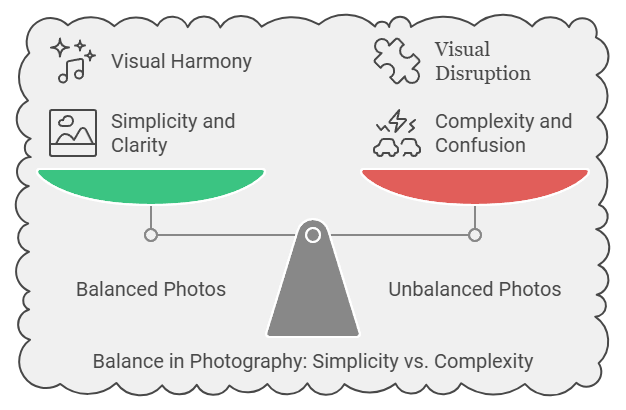
A balanced photo is simple to look at and guides your eye. Most of us like a balanced image because they’re simpler to understand. To get balance, you need to place elements at the right points and think about their weight.
Visual weight in photos is how much something grabs your eye. Here are things that affect visual weight:
Photography harmony happens when all parts of the image work together. The rule of thirds is a key way to balance photos. By placing subjects on grid lines, you make your photos more interesting.
| Technique | Effect on Balance | Application |
|---|---|---|
| Rule of Thirds | Creates pleasing compositions | Position subjects on intersecting grid lines |
| Negative Space | Draws attention to the main subject | Use empty areas to frame your subject. |
| Tilted Frames | Adds dynamism to images | Slightly angle the camera for unique perspectives that challenge static compositions. |
Getting dynamic balance in your photos takes time and practice. Try these techniques to make your photos stand out and look great.
Pro-Tip
Balance in photography is key to making images look great. Let’s discuss the main balance types and how to use them in photos.
Symmetrical balance makes your images look like mirrors. It adds a touch of elegance and formality. You’ll see it frequently in photos of buildings.
To get symmetrical balance, split your frame in half. Put your subject right in the middle. Make sure the elements on both sides are the same.
Asymmetrical balance in photography refers to a style of visual design that emphasizes circular shapes, movement, and flowing patterns. This dynamic balance creates photos that are full of life and passion. This technique creates a sense of harmony and energy.
Tonal balance is also crucial in achieving dynamic and visually striking images. By incorporating these principles, photographers can capture photos that are both engaging and visually appealing.
Radial composition puts elements around a central point. It makes a strong focal point that pulls the viewer in. It’s ideal for photos of flowers or round objects, emphasizing tonal balance in composition.
Put your main subject in the centre. Let other elements spread out from there.
Crystallographic balance, or mosaic balance, creates a sense of order. It uses patterns to fill the frame evenly. This style doesn’t have a clear focal point but makes everything work together.
You might see it in abstract photos or when capturing textures.
Looking to stretch your budget? We’ve got good news! Save an additional 10% use code bwild10
| Balance Type | Characteristics | Best Use |
|---|---|---|
| Symmetrical | Mirror-like, formal | Architecture, portraits |
| Asymmetrical | Dynamic, modern | Street and landscape photography |
| Radical | Centred, radiating in a static manner. | Flowers, circular objects |
| Crystallographic | Repeating patterns | Abstract, textures |
Learning these balance types will make your photos more engaging. Try out different styles to see what fits your subjects and style best.
Pro-Tip
Visual balance in photography is all about key elements. Understanding these elements can enhance the visual appeal of your photos. Let’s look at how colour, size, texture, and space come together for balance your composition.
Bright and warm colours pull more attention than cool or muted ones. Arranging colours well helps guide the viewer’s eye and brings harmony to your photos. Tonal contrast also matters, with dark areas seeming heavier than light ones.
The size of objects in your photo affects their importance. Big elements grab more attention, so balance them with smaller details. Think about how different sizes tell your story in portrait photography.
Textures and patterns add depth to your photos. Rough textures feel heavier than smooth ones, and repeating patterns create rhythm. Use these to add interest and guide the viewer’s eye.
Negative space is a powerful tool for balance. It gives room for your main subject and can add simplicity or drama, contributing to tonal balance. By using empty space wisely, you can make your focal points pop and improve balance.
| Elements | Impact on Balance | Tips |
|---|---|---|
| Colour | Affects visual weight | Use warm colours sparingly for emphasis. |
| Size | Influences importance | Balance large subjects with smaller details. |
| Texture | Adds depth and interest | Combine smooth and rough textures. |
| Negative Space | It establishes breathing space and fosters an understanding of balance in photography. | Use it to highlight main subjects. |
Mastering dynamic balance in photography can make your images stand out. Let’s dive into some advanced techniques to create stunning compositions.
The rule of thirds is a key tool for balance. Imagine your frame as a 3×3 grid. Place important elements on these lines or at their points. This approach enhances the engagement of your image compared to placing your subject at the centre.
Leading lines guide the viewer’s eye through your image, enhancing balance and tension. Use natural or man-made lines to lead to your focal point. Rivers, roads, or shadows can be powerful leading lines, adding depth and movement.
Intentional imbalance can add drama. Place your subject outside the centre or use diagonal lines for movement to achieve balance and tension. This is especially effective in landscape photography, where stormy skies or rushing water can create tension.
When dealing with multiple subjects, think about their visual weight. Larger or brighter elements weigh more than smaller or darker ones. Spread these elements across your frame thoughtfully to achieve balance. Balance doesn’t always mean symmetry.
| Technique | Application | Effect |
|---|---|---|
| Rule of thirds | Place subjects at grid intersections. | Creates visual interest |
| Leading Lines | Use natural or man-made lines. | Guides viewers' eyes while maintaining balance in photography composition. |
| Tension | Off-centre placement | Adds drama to composition, enhancing the overall balance and tension. |
| Multiple Subjects | Distribute visual weight | Achieves overall balance |
By mastering these techniques, your photos will become more dynamic and engaging. Remember, practice is key. Try these concepts in different settings to find what suits your style best.
Pro-Tip
Dynamic balance in photography is key to making stunning images. As you learn about visual balance, you’ll see that every photo is a choice. You can use symmetrical or asymmetrical balance to change the mood of your photos.
The rule of thirds is a big help in photography. It guides you to place important parts of your photo on imaginary lines. This makes your photos more interesting. Warm colours, like red and orange, are heavier than cool colours, helping you balance your photos.
Getting better at visual balance is not just about taking photos. Editing your photos is also important. You can crop and adjust colours to make your photos even better. With practice, you’ll get better at balancing your photos, making them even more amazing.
Dynamic in photography refers to creating a sense of movement, energy, and visual flow through composition techniques like leading lines, diagonal angles, and implied motion. It captures the dramatic interplay of elements that guide viewers’ eyes through the image, making photos more engaging and emotionally impactful..
Dynamic balance is a compositional technique that creates visual tension and interest by using asymmetrical elements to counterbalance each other. It’s like a seesaw, but for your eyes.

Colour theory for photographers is something I never thought about when I first started out.

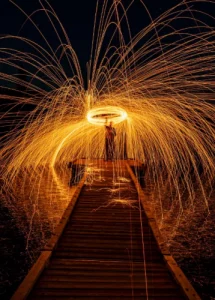
I think steel wool photography creates some of the most amazing images you can capture

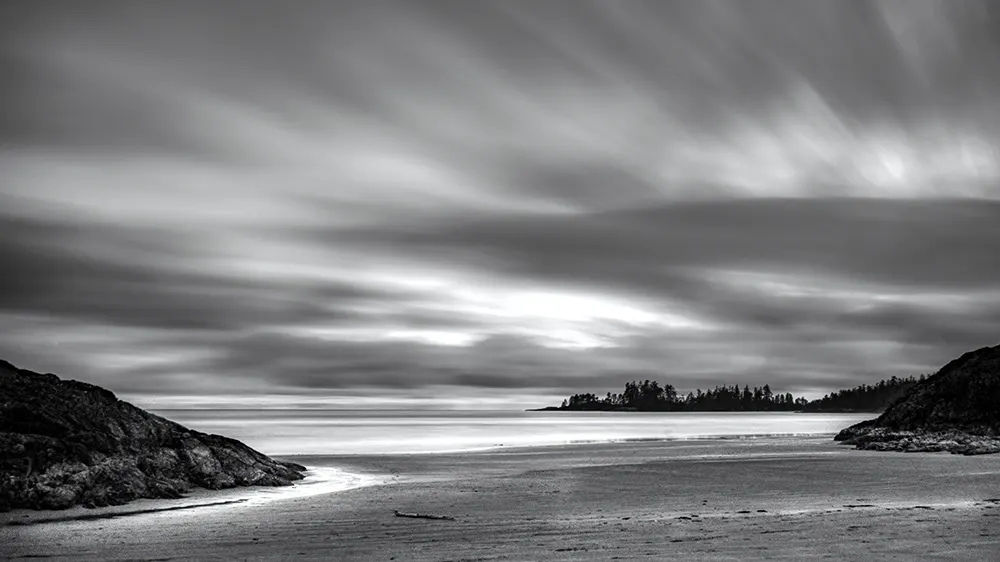
Long exposure photography is a technique that uses slow shutter speeds to capture silky smooth