Colour Theory for Photographers: A Practical Guide
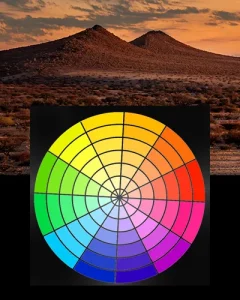
Colour theory for photographers is something I never thought about when I first started out.

Share the Love This Valentine’s Day – 25% Off
As a landscape photographer, I love getting out and taking pictures of storms and lightning. I find it exciting to be able to capture the sheer force of nature. I like the challenge of trying to capture moments that will never happen again. Each flash in the sky tells a different narrative.
If you’re interested in shooting storms, join me as I talk about ideas, tactics, and the exciting experiences that come with storm chasing and lightning photography!
Lightning photography is the art of capturing images of lightning bolts. It involves using various techniques and tools to photograph lightning strikes during a thunderstorm. Successful lightning photography captures the raw power and beauty of nature, turning fleeting moments into lasting art.
Lightning is a dramatic discharge of electrical energy that occurs during a thunderstorm. It happens due to the buildup of electrical charges within storm clouds. When the electrical potential becomes too great, a rapid discharge occurs, creating a visible lightning flash. Understanding this phenomenon can improve your chances of capturing impressive lightning images.
Here are several types of lightning that can be observed. Knowing them can help you anticipate where to photograph during a storm. These types include:
Cloud-to-ground lightning is the most commonly photographed, as it creates spectacular displays, making it perfect for capturing lightning strikes.
To photograph lightning effectively, you’ll need a DSLR or mirrorless camera with manual mode. Mastering certain camera settings is essential, including
A wide-angle lens (e.g., 14-35 mm) is ideal for capturing broad scenes, while a telephoto lens (e.g., 70-200 mm) can isolate specific lightning bolts.
A sturdy tripod is crucial for long-exposure photography during thunderstorms. It prevents camera shake and ensures sharp images. Using a cable release or the camera’s self-timer can further minimize movement, offering stable shooting and lightning experiences.
Neutral density (ND) filters are useful for daytime, allowing for longer exposures in bright ambient light. An intervalometer can automate the process of taking continuous shots, increasing your chances of capturing lightning strikes. A Pluto trigger can also automatically trigger the shutter when lightning is detected. These are valuable tools for lightning photography.
Looking to stretch your budget? We’ve got good news! Save an additional 10% use code bwild10
I often prefer using manual mode to precisely control my camera settings. A low ISO, such as ISO 100 or 200, will minimize noise in your images. Adjust your aperture to around f/8 to f/16 for sufficient depth of field, ensuring both the foreground and the lightning bolt are sharp.
When it comes to exposure, start with a longer exposure, such as several seconds, and adjust based on the ambient light and the frequency of lightning strikes. Using the histogram on your camera can help prevent overexposed or underexposed images. Experiment with different shutter speeds to see what works best for the stormy conditions, ensuring a well-exposed image.
Long exposure photography is generally favoured for night, as it allows you to capture multiple lightning strikes. Shorter exposure times might be more suitable during the day when using an ND filter to manage ambient light. The choice between long exposure and shorter exposure depends on the specific lighting conditions and the desired effect for the lightning storm.
Incorrect exposure is a common mistake in lightning photography. Overexposure makes the image too bright, losing detail in the highlights. Underexposure results in a dark image with lost details in the shadows. Monitoring your histogram and adjusting your settings is vital for a balanced exposure, thus improving your chances of capturing lightning.
Safety is always the top priority when photographing lightning. Never stand in open fields or near tall objects that could attract lightning. Stay inside a vehicle or a sturdy building during the storm. Remember, stunning images aren’t worth risking your safety.
While capturing a lightning bolt is exciting, don’t neglect composition. Focus on the foreground and background for a balanced scene. Use the rule of thirds and leading lines to enhance your images. A well-composed lightning photograph tells a story and captures the viewer’s attention.
Post-processing is crucial for enhancing lightning photography. Adjust the exposure to reveal details in the lightning and landscape. Increase contrast to make the lightning stand out. Reduce noise and sharpen the image to improve clarity and details.
Several software options are available for editing lightning photography. Here are some of my popular choices.
Storms are a mix of wind, rain, and raw electricity that should stir something inside each of us. Every flash of lightning is both a challenge and an invitation to create art.
With the right preparations, we can turn those fleeting moments into lasting images. So when the sky darkens, or when the wind picks up and the rain begins to fall, be ready to head out, and let the storm tell its story through our lens.
To photograph a lightning storm, use a tripod and a slow shutter speed (5-20 seconds) to capture the flashes of light. Set your camera to a low ISO (100-400) and a narrow aperture (f/8 or higher). Always prioritize safety and shoot from a secure, dry location
How does lightning affect photography? Lightning is a powerful, fleeting light source that requires specific camera settings. Its unpredictable nature forces photographers to use a tripod and long exposures to capture a strike, while a low ISO and narrow aperture prevent overexposure.

Colour theory for photographers is something I never thought about when I first started out.

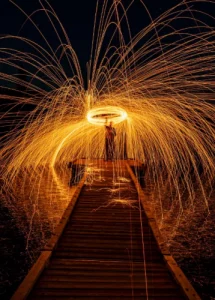
I think steel wool photography creates some of the most amazing images you can capture

Long exposure photography is a technique that uses slow shutter speeds to capture silky smooth